In a neighborhood where the largest buildings long ago captured the waterfront and the headlines, Opus arrives with a different proposition: not scale, but precision.
Not hundreds of units, but fourteen — each one a considered act of architecture, each terrace aimed at the canopy and the bay.
Opus Coconut Grove is a boutique residential building at 3127 SW 27th Avenue in Miami, FL 33133 — fourteen luxury condos for sale in Coconut Grove across four residential floors, a furnished mezzanine, and two penthouse levels. Residences range from 1,905 to 3,884 sq. ft. and are priced from $2,900,000.
The developer is Meta Development, led by Andrew Rasken — a licensed Florida contractor and broker who was born and raised in Coconut Grove and spent nearly two decades building exclusively in its streets.
His portfolio of luxury residences exceeds $30 million. He is joined by Bruno Guedes, Founder and CEO of Iron Capital — a São Paulo–based asset management firm overseeing a $1 billion portfolio — and Bruno Benevides, Head of Origination, who manages a real estate pipeline exceeding $250 million across South Florida and São Paulo.
The capital infrastructure behind Opus is a transatlantic partnership: Florida operational expertise meeting Brazilian financial depth.
Kobi Karp Architecture & Interior Design designed the Opus building around a single organizing principle: a boutique residential structure should feel like a private home, not a scaled-down tower.
The firm's South Florida portfolio spans multibillion-dollar projects — including Monad Terrace, engineered to hurricane standards — and Karp's personal involvement in the Coconut Grove project continues his commitment to the neighborhood.
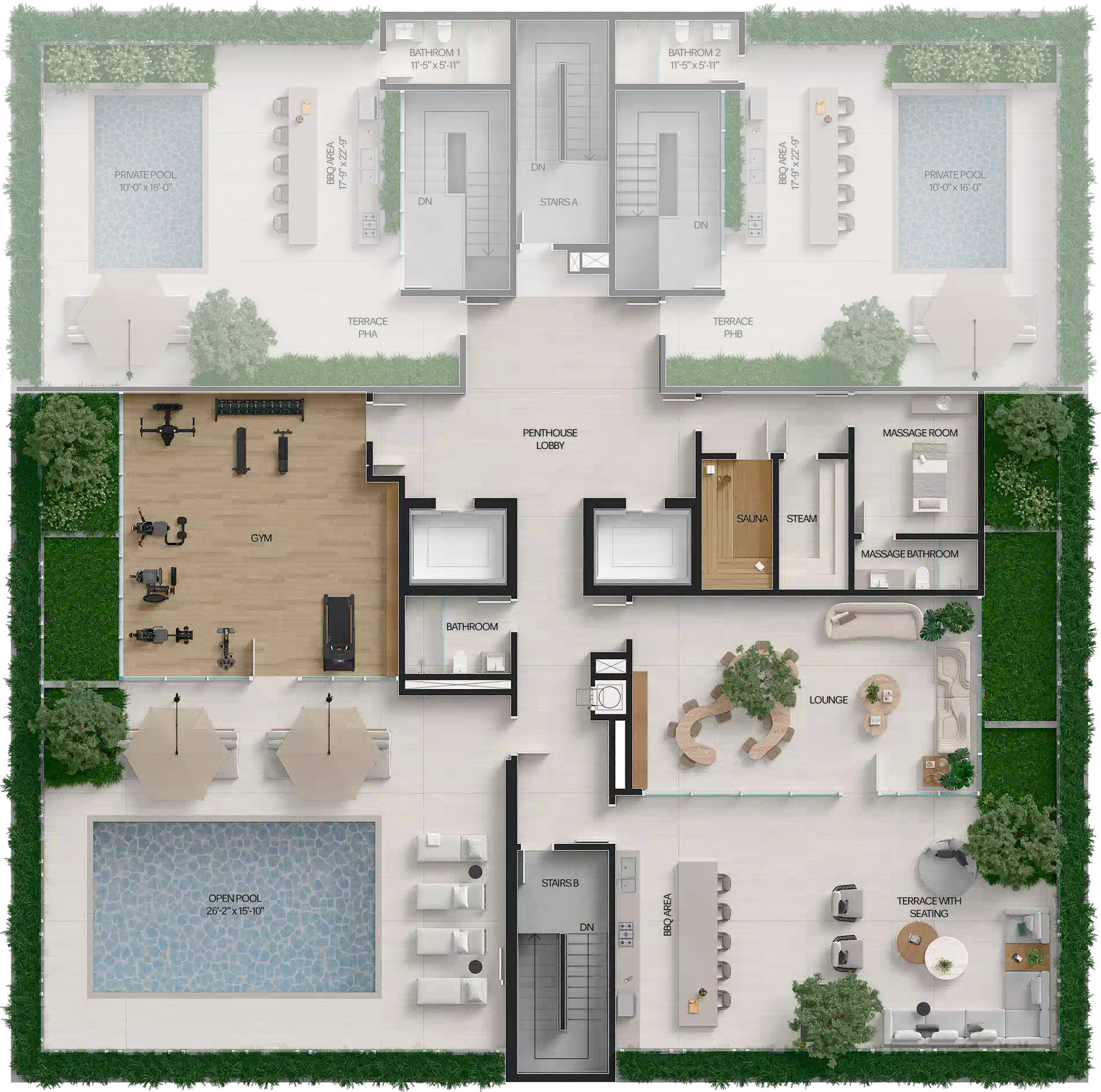
The result at Opus is a low-rise building of just four residential floors above grade, with a dedicated rooftop amenity level above.
Vertical green cascades animate the façade, echoing the Grove's canopy while dissolving the boundary between built form and the natural environment of Biscayne Bay.
Ceilings reach up to 12 feet throughout, and full-height laminated, high-efficiency glass spans each residential wall — eliminating visual barriers between the interior living space and the private terrace beyond.
With just two to four residences per floor, the shared corridors and elevators never function as common property in any meaningful sense.
Interior design is the work of João Armentano — a Brazilian architect with nearly four decades of practice across commercial, residential, and hospitality sectors. His credits include Hotel Unique in São Paulo and Hotel Carmel Taíba in Ceará.
At Opus, Armentano combines relaxed coastal materiality with contemporary precision: open kitchen configurations with Italian cabinetry, full-height glass facades that integrate the living room and the terrace, and a considered palette of high-standard porcelain and natural materials throughout.
Landscape design is by David O. Inc. Landscape Architecture.
Each residence arrives pre-wired for smart home automation and window treatments, with high-efficiency thermal insulation on both the roof and walls. Solid wood internal doors run throughout.
The building is designed to support the operational reality of a primary home, not a seasonal pied-à-terre — though it functions excellently as both.
Opus offers twelve standard residences across Levels 2, 3, and 4, plus two penthouses at the building's crown. All standard floor plans are three-bedroom, 3.5-bathroom configurations — the half-bath serves as a powder room. There are no studios, one-bedrooms, or two-bedrooms in the building; the baseline unit is a three-bedroom home. Prices begin at $2,900,000; penthouse pricing is available upon request.
Level 2
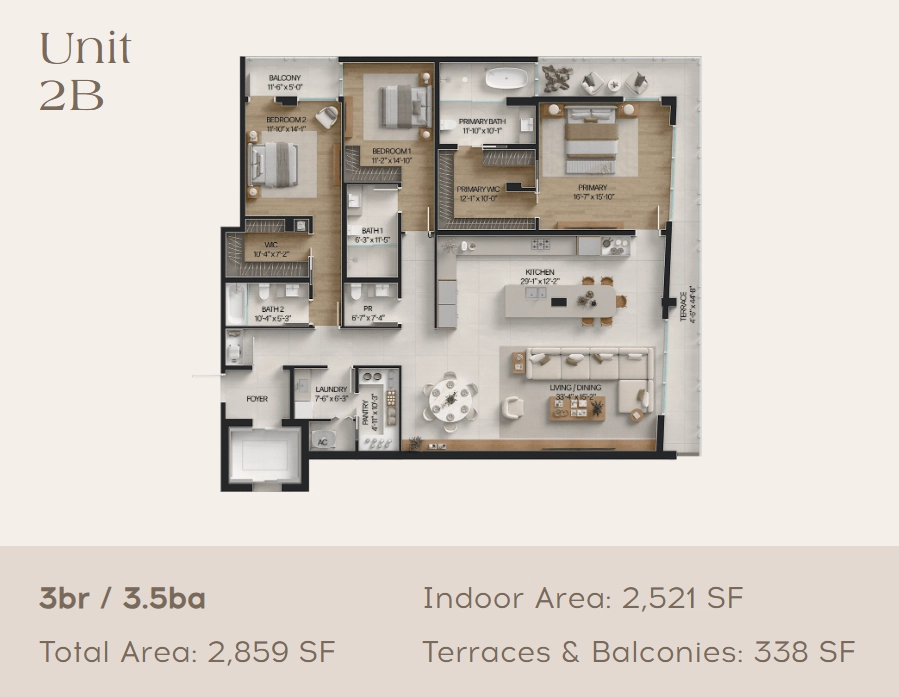
| Unit | Bed/Bath | Indoor SF | Outdoor SF | Total SF | Terrace Note |
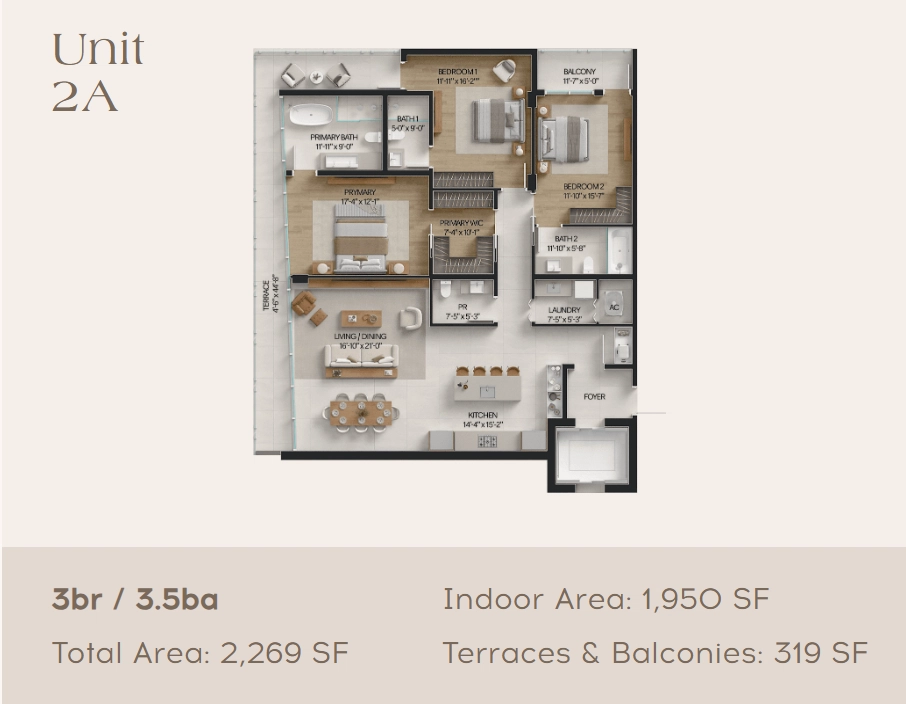
| 2A | 3 / 3.5ba | 1,950 SF | 319 SF | 2,269 SF | Bay views |
| 2B | 3 / 3.5ba | 2,521 SF | 338 SF | 2,859 SF | Bay views |
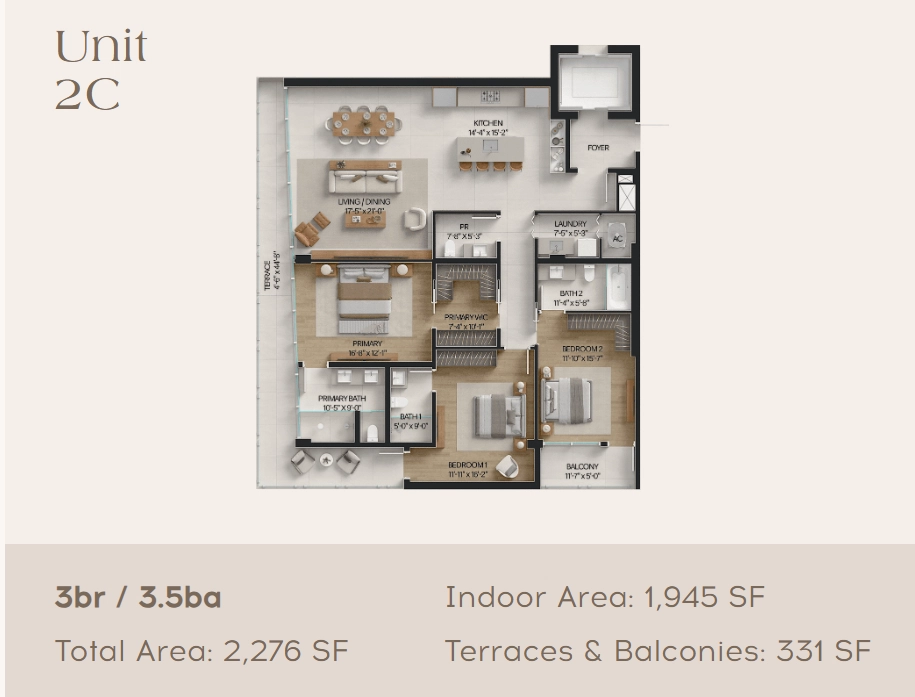
| 2C | 3 / 3.5ba | 1,945 SF | 331 SF | 2,276 SF | Bay views |
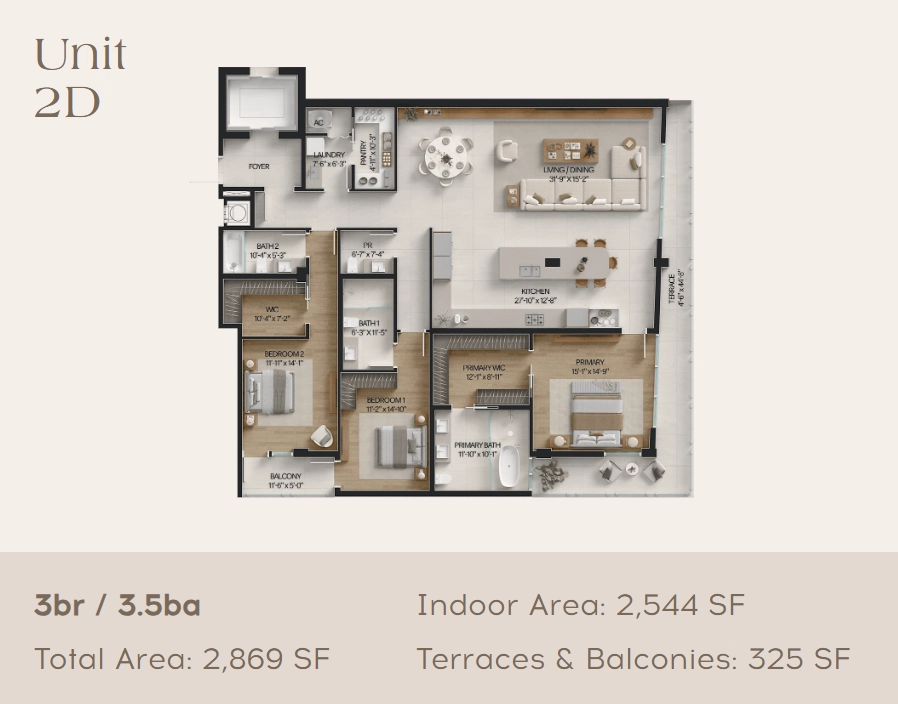
| 2D | 3 / 3.5ba | 2,544 SF | 325 SF | 2,869 SF | Bay views |
Units 2B and 2D are the building's two most expansive standard residences, at approximately 2,859 and 2,869 total sq. ft., respectively, with kitchens nearly 30 feet long and gas grills on their terraces.
Unit 2A and 2C offer the same three-bedroom, 3.5-bathroom configuration at a more compact 2,269–2,276 sq. ft. — a practical entry point into the building without any reduction in finish quality.
Level 3
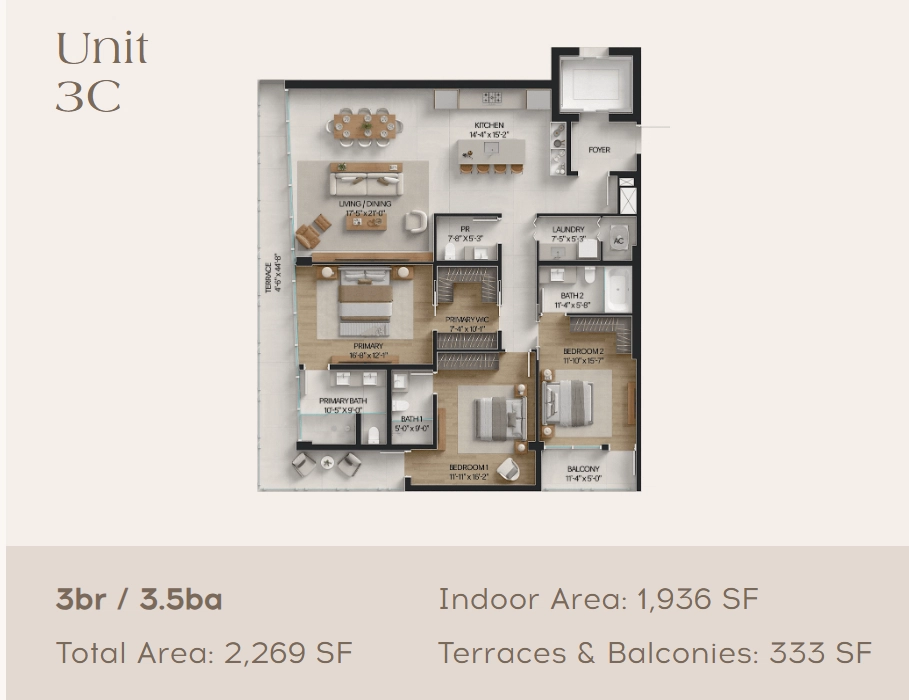
| Unit | Bed/Bath | Indoor SF | Outdoor SF | Total SF | Terrace Note |
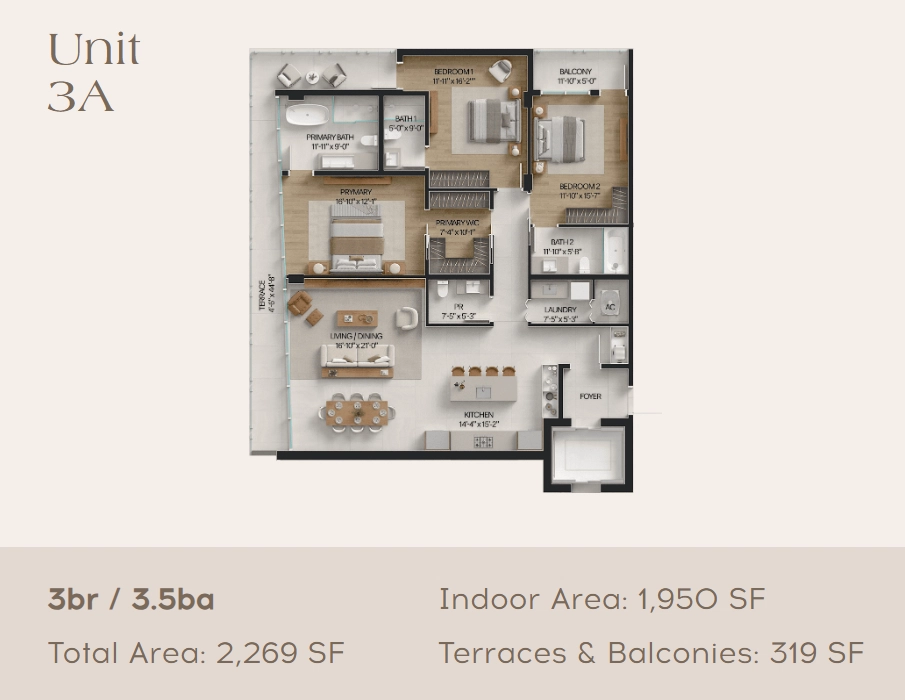
| 3A | 3 / 3.5ba | 1,950 SF | 319 SF | 2,269 SF | Bay views |
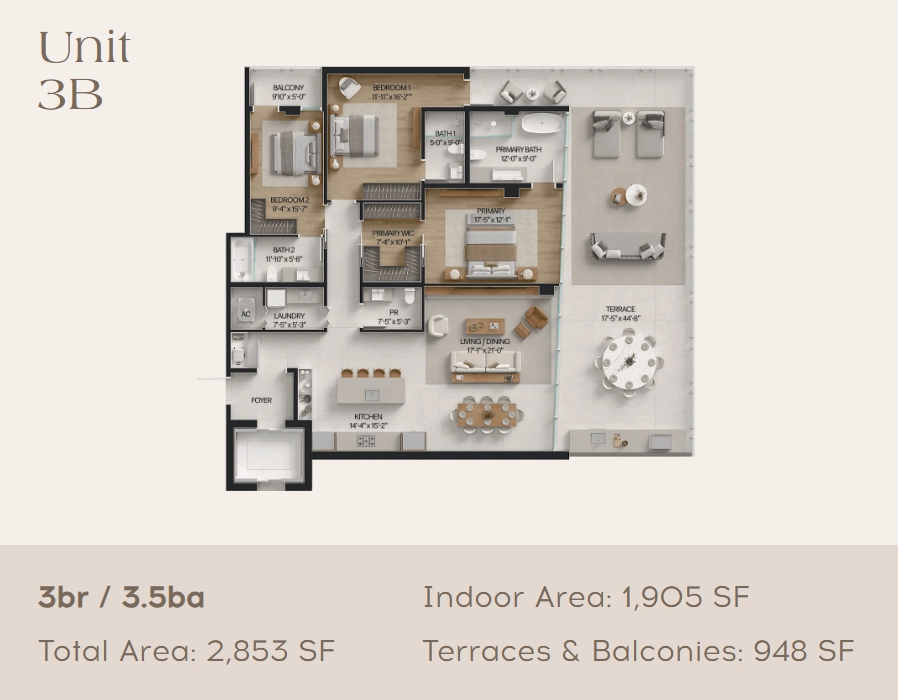
| 3B | 3 / 3.5ba | 1,905 SF | 948 SF | 2,853 SF | Wrap terrace — bay & city |
| 3C | 3 / 3.5ba | 1,936 SF | 333 SF | 2,269 SF | Bay views |
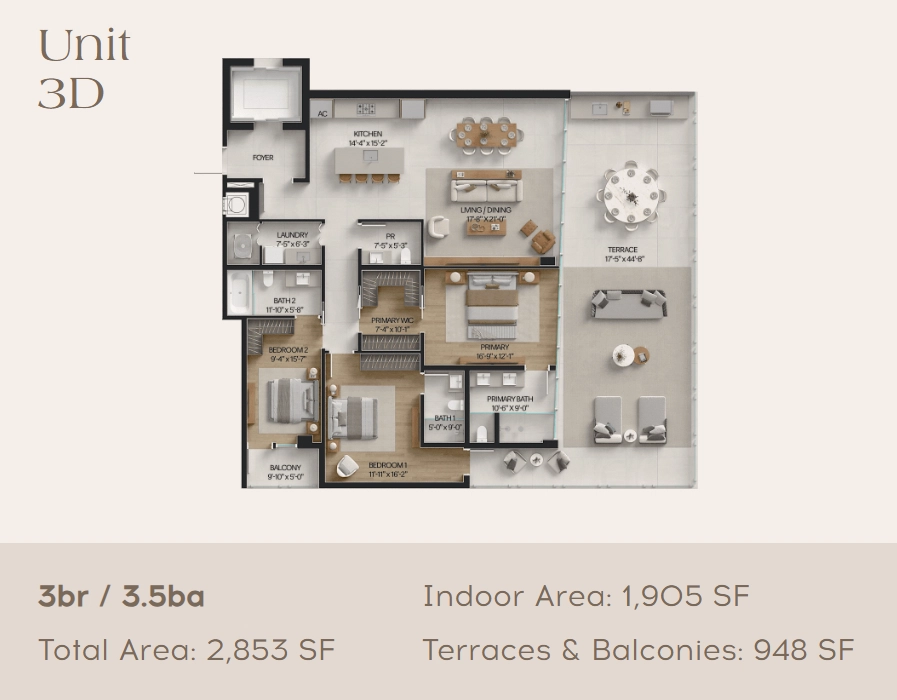
| 3D | 3 / 3.5ba | 1,905 SF | 948 SF | 2,853 SF | Wrap terrace — bay & city |
Units 3B and 3D are Opus's most extraordinary outdoor living propositions. With 948 sq. ft. of wraparound terrace — more outdoor square footage than the interior of many Miami condominiums — these two Level 3 residences effectively function as homes with an additional outdoor room the size of a studio apartment.
The terrace's orientation captures views of both the bay and the city. For buyers who live outdoors as much as in, 3B and 3D occupy a category of their own within this building.
Level 4
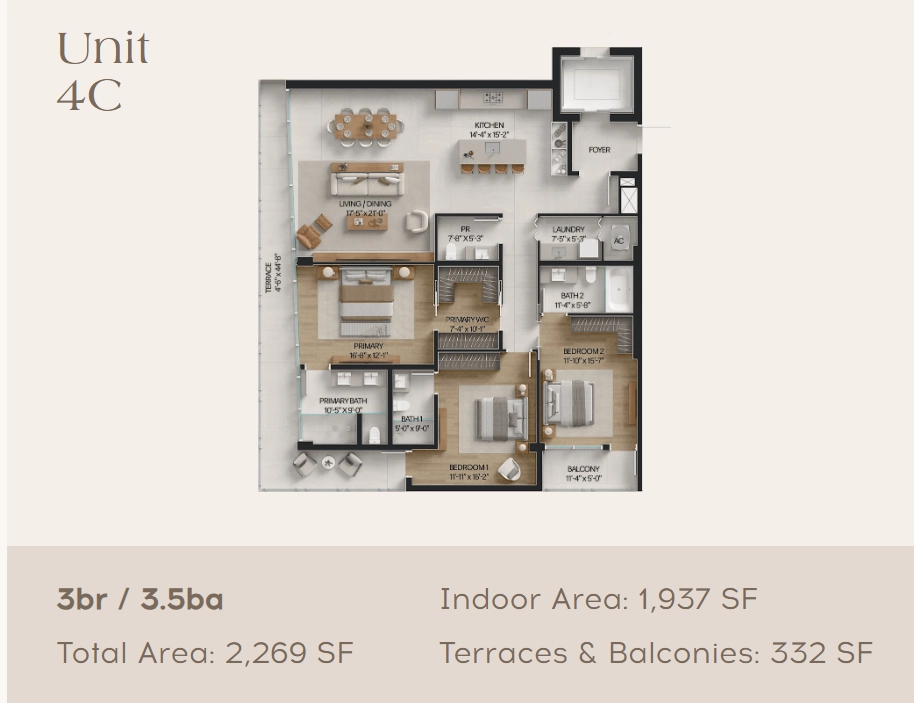
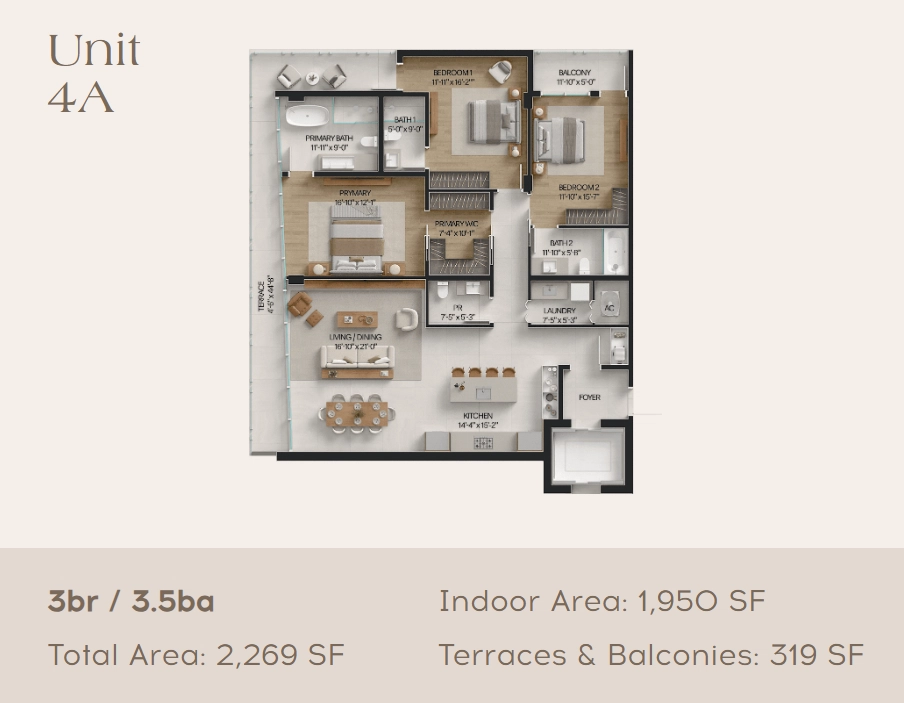
| Unit | Bed/Bath | Indoor SF | Outdoor SF | Total SF | Terrace Note |
| 4A | 3 / 3.5ba | 1,950 SF | 319 SF | 2,269 SF | Bay views |
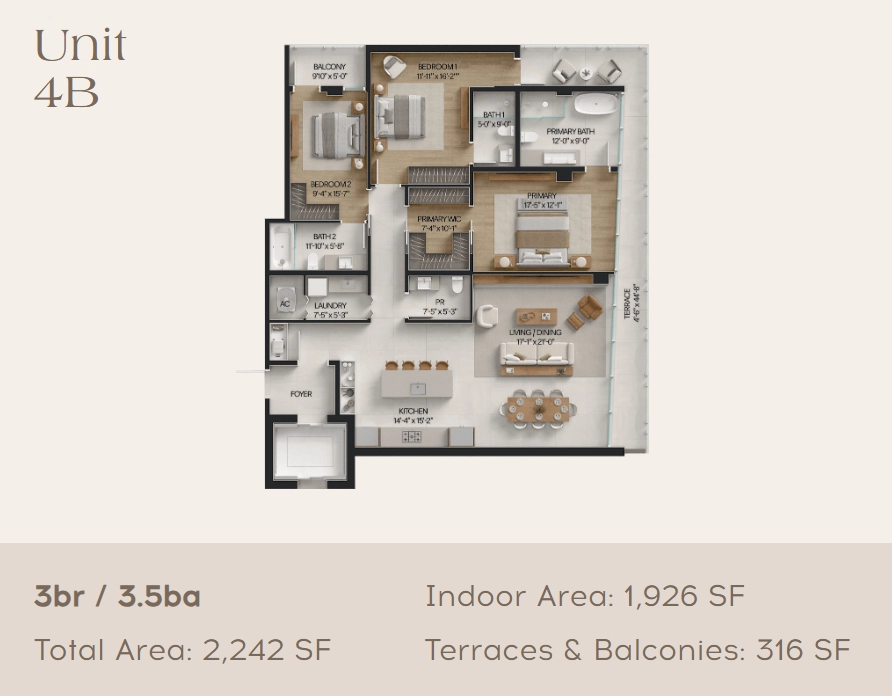
| 4B | 3 / 3.5ba | 1,926 SF | 316 SF | 2,242 SF | Bay views |
| 4C | 3 / 3.5ba | 1,937 SF | 332 SF | 2,269 SF | Bay views |
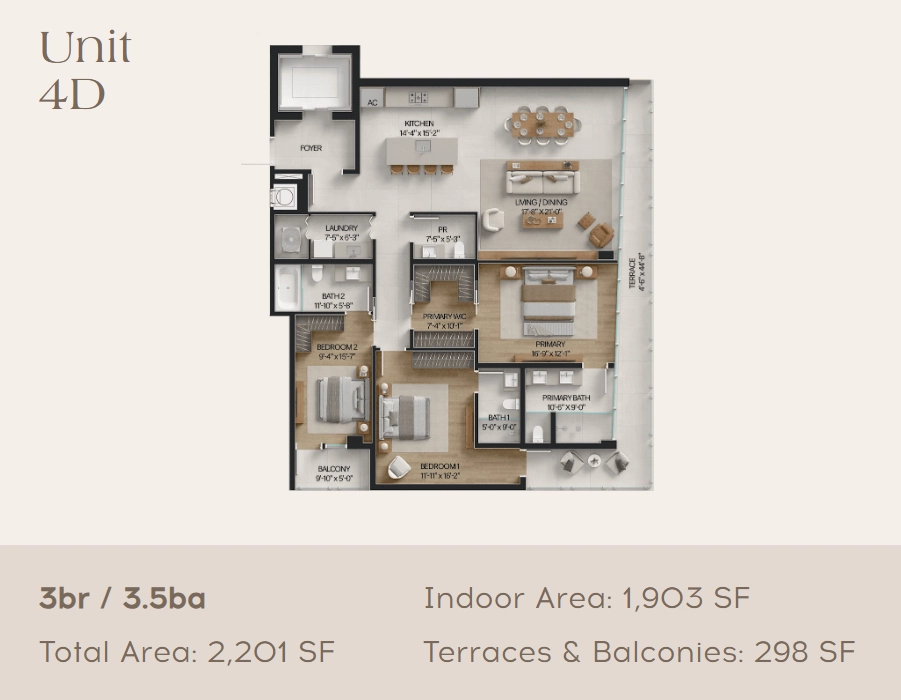
| 4D | 3 / 3.5ba | 1,903 SF | 298 SF | 2,201 SF | Bay views |
Level 4 residences sit at the building's uppermost residential elevation, commanding the most elevated canopy and bay views of any standard floor.
The four units range from 2,201 to 2,269 total sq. ft. — slightly more compact than Level 2's larger plans, but distinguished by their position above the surrounding treeline.
Penthouses
Two penthouses crown Opus Coconut Grove at the building's top level, with decorated leisure areas and panoramic city, canopy, and bay views. At up to 3,884 sq. ft., these are the defining residences of the building.
Penthouse pricing is available upon request.
Standard Residence Specifications — All Units
Rooftop — Pool, Gym & Lounge
The entire rooftop level is devoted to resident programming: a secluded pool, bar, and lounge with panoramic views over the Grove canopy and toward Biscayne Bay. The rooftop gym is equipped with both cardio and weight machines, positioned to take advantage of bay views rather than interior walls.
A covered patio adjoins the pool with an outdoor kitchen and gas BBQ grill — a natural extension of the social life that the building's scale encourages. With fourteen residents sharing this level, the rooftop at Opus is, in practice, a private amenity.
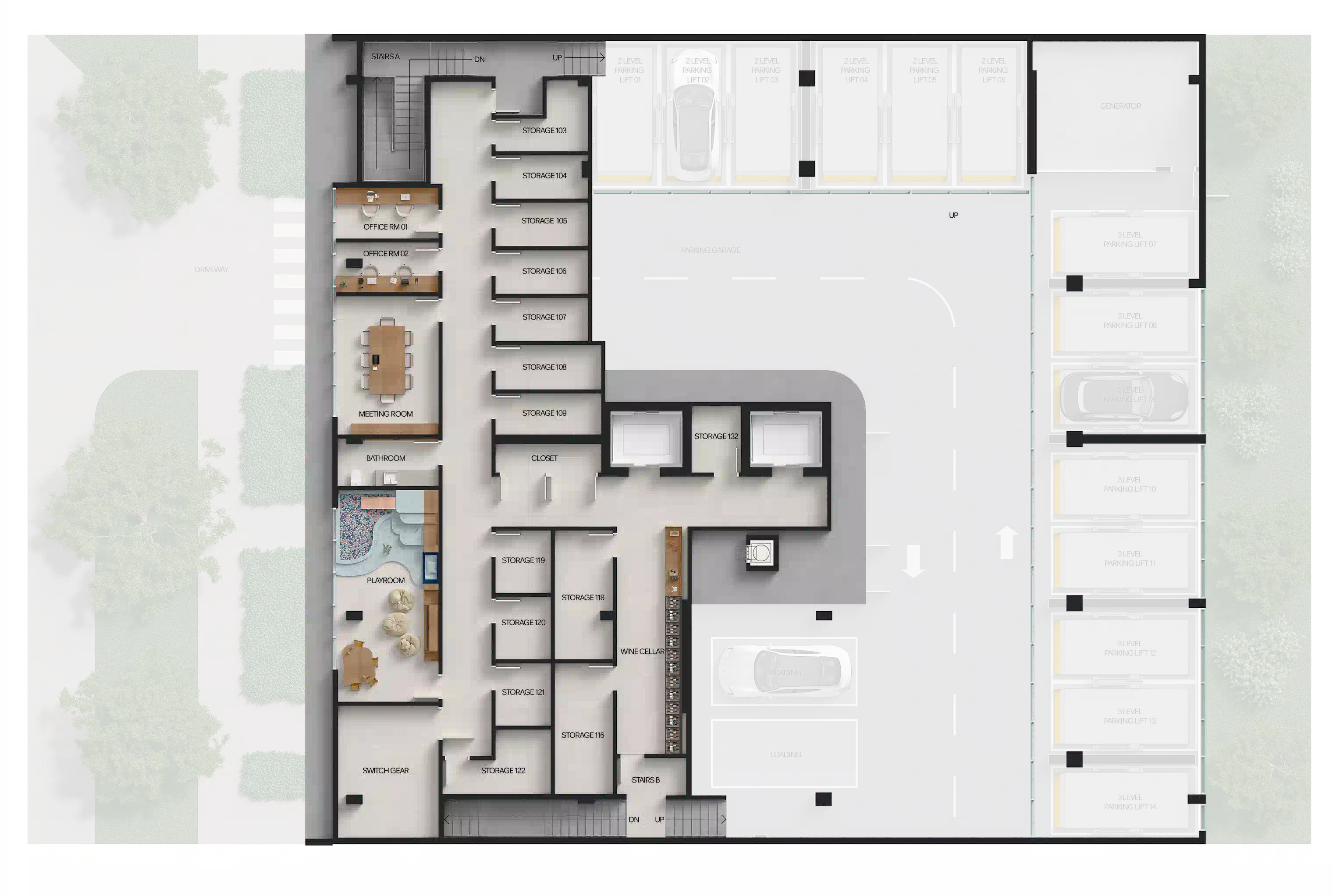
Mezzanine — Business, Social & Wine
The mezzanine houses the building's professional infrastructure: a business lounge with private offices and a conference room.
Every unit receives a dedicated private wine cellar at this level — a specification that distinguishes Opus from virtually every comparable boutique building in Miami.
The children's playroom is also located here, creating a social floor that serves residents' daily life across different household structures. Dedicated storage units are allocated per residence.
Spa
The exclusive spa includes a sauna, steam room, and massage room — three elements that cover the core wellness use cases without the overhead of a hotel-sized facility.
With fourteen owners sharing the program, scheduling conflicts and peak-hour crowding are structural impossibilities rather than managed inconveniences.
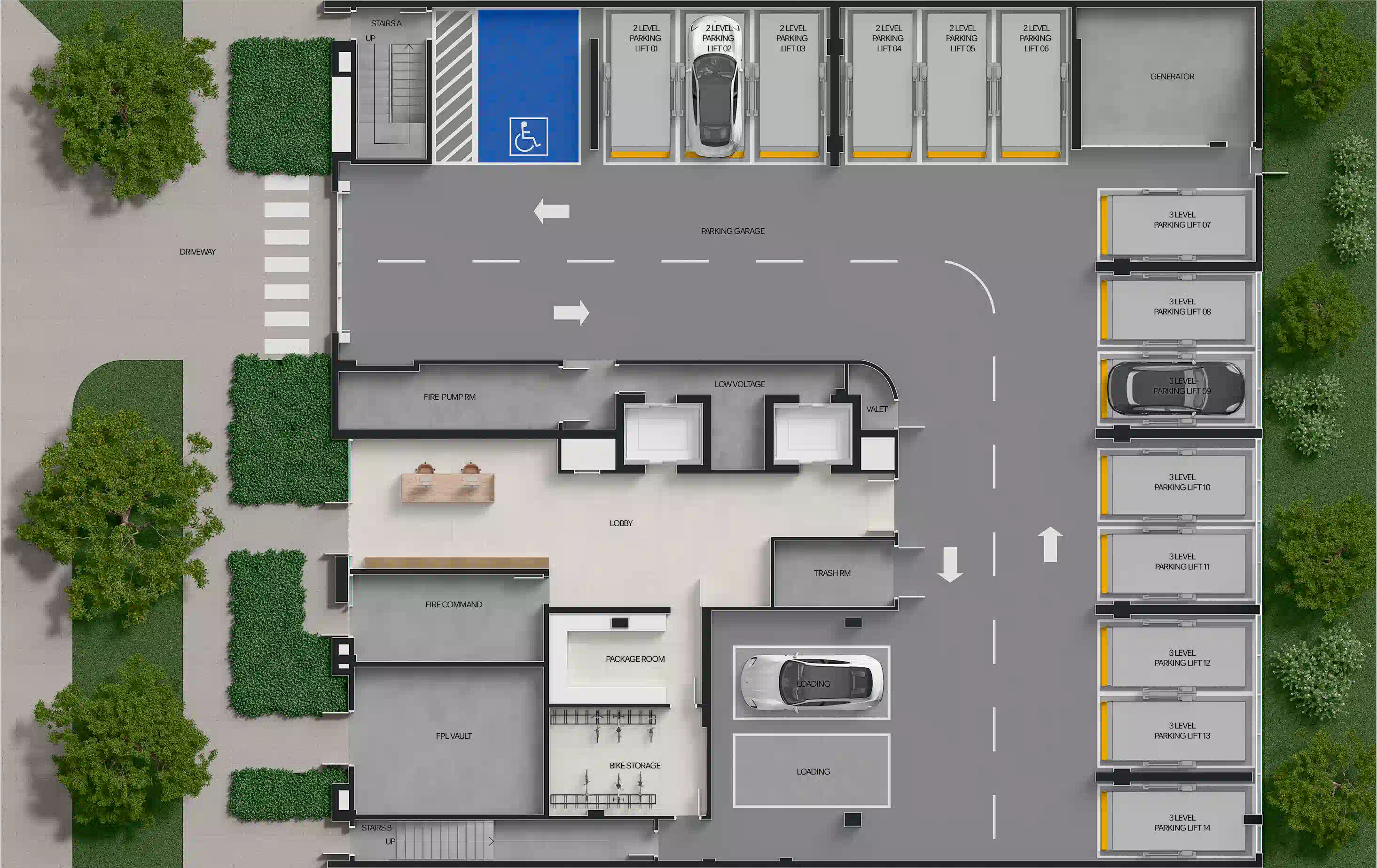
Parking — Klaus Autonomous System
Opus uses the Klaus fully autonomous parking system, eliminating the need to navigate multi-level parking ramps. Two assigned spaces per residence are accessed through the automated system.
For a neighborhood where street parking and garage navigation are routine friction points, this is a genuine operational advantage for daily life.
Building Services
Twenty-four-hour concierge reception, valet parking, and security operate as standard building services. HD security cameras are installed throughout the property. Bicycle storage is provided.
Coconut Grove is the oldest continuously inhabited neighborhood in Miami-Dade County — a fact that explains its anomalous character among Miami's neighborhoods. While Brickell builds upward and Edgewater builds outward, the Grove builds around its trees.
Zoning constraints, a vocal historic preservation constituency, and the physical reality of Biscayne Bay to the east have kept the neighborhood's density low and its street character intact.
These are structural conditions, not marketing talking points: they are why boutique buildings like Opus are rare here, and why they stay rare.
The building sits on SW 27th Avenue, less than a five-minute walk from CocoWalk — the neighborhood's urban village retail anchor with restaurants, boutiques, and a Cinépolis cinema.
From CocoWalk, residents reach Glass & Vine in Peacock Park (a James Beard-nominated restaurant set directly on Biscayne Bay) in under ten minutes on foot.
Ariete, Chef Michael Beltran's Michelin-starred flagship on Fuller Street, is the Grove's most sought-after reservation. Le Bouchon du Grove has anchored the neighborhood's French dining culture for over thirty years.
Lokal, a Grove institution at Main Highway and Grand Avenue, serves as a neighborhood gathering place that most Miami neighborhoods lack entirely.
The Coconut Grove Sailing Club and the Dinner Key Marina — one of Biscayne Bay's largest, with hundreds of slips — are 0.7 miles from Opus. Peacock Park's public waterfront is within a ten-minute walk.
This is bay access of the kind that most Miami neighborhoods cannot offer: not a hotel pool deck with a water view, but public waterfront access adjacent to the full range of private marina infrastructure.
For families, Ransom Everglades School — consistently ranked among Florida's top independent secondary institutions — is approximately 0.7 miles by car. Carrollton School of the Sacred Heart is within 1.2 miles.
The local public option, David Fairchild K-8, is within the neighborhood. This combination of academic options within minutes of the front door makes Opus more practically family-friendly than most boutique luxury buildings in Miami's more commercial districts.
The Coconut Grove Metrorail station is 0.4 miles from the building, connecting residents to Brickell in approximately 12 minutes and to Vizcaya in 7, without a car.
Miami International Airport is 8 miles west via the Dolphin Expressway — typically 18 to 22 minutes outside peak hours. For residents who travel internationally, this is one of the more efficient airport connections of any Miami luxury residential address.
What Coconut Grove does not offer — and buyers should weigh this honestly — is the financial services density of Brickell or the international retail concentration of Bal Harbour.
The neighborhood's walkable dining scene is excellent but small: perhaps fifteen destination restaurants rather than fifty. The Grove's identity is residential and maritime first. Buyers choosing
Opus is choosing the bay, the canopy, and the quiet—and accepting that dinner at Cipriani requires a 12-minute drive.
Coconut Grove's real estate market operates under structural rather than cyclical supply constraints. The neighborhood's historical preservation requirements, bayfront geography, and low-density zoning combine to make new boutique-luxury inventory rare.
In the five years to 2025, only a handful of boutique condominium projects at the Opus scale — fewer than twenty units — entered the Coconut Grove market.
The result is a sub-market where resale premiums on boutique buildings have consistently outpaced those on larger tower developments, where the supply of comparable units is always thin.
The comparison with Park Grove — the three-tower development by Terra at the south end of the Grove, designed by OMA's Rem Koolhaas — is instructive. Park Grove is architecturally significant and well-located, but its three towers total several hundred units.
Its resale market is consequently both liquid and competitive: at any given time, buyers choosing between Park Grove units have multiple options at similar price points.
At Opus, with 14 total residences, a resale unit is, by definition, a singular event in the market. Scarcity at this scale is a structural price-support mechanism.
According to the Knight Frank Branded Residences Report, branded residences globally command an average price premium of approximately 31% over unbranded comparable products in the same submarket.
Opus is not a branded hospitality residence, but its combination of a named architect (Kobi Karp), a named interior designer (João Armentano), and a developer with thirty years of embedded local market knowledge (Andrew Rasken, born and raised in the Grove) positions it within the upper specification tier at which similar premiums have been observed in Miami's boutique residential market.
Rental policy is subject to the finalization of the HOA documents prior to closing. Buyers with investment or income intent should confirm short-term and long-term rental eligibility directly with The Nicolas Group before contract execution.
Coconut Grove's location — 12 minutes by Metrorail from Brickell's financial district — generates consistent professional rental demand independent of seasonal patterns.
Opus Coconut Grove is in the pre-construction phase as of 2025–2026. Buyers should confirm the current construction timeline and projected delivery date directly with The Nicolas Group.
Pre-construction timelines in South Florida typically run two to four years from groundbreaking, and buyers should factor this in when planning financing and occupancy.
Rental eligibility — including both short-term (Airbnb, VRBO) and long-term leasing — is subject to the HOA documents, which are finalized prior to closing.
This is standard for pre-construction condominiums in Florida. Confirm the specific rental policy and any minimum lease term requirements with The Nicolas Group before signing a purchase agreement.
Three structural factors support long-term value at Opus: the fourteen-unit scale creates inherent resale scarcity; Kobi Karp's architectural credentials and João Armentano's interior design track record support price positioning at the boutique premium tier.
And developer Andrew Rasken's 30 years of local market experience — as a contractor who built in the Grove, not merely as an investor in it — significantly reduces execution risk.
No comparable pre-construction offering with this combination of scale, specification, and development pedigree is visible in the current Coconut Grove pipeline.
Park Grove (three towers, several hundred units, Rem Koolhaas design) and Arbor both represent credible Coconut Grove offerings, but neither operates at a scale where fourteen total residences generate the inherent resale scarcity that Opus provides.
At Park Grove, resale inventory is typically available across multiple concurrent listings; at Opus, a resale is a singular market event.
For buyers to whom community size matters — quiet corridors, unhurried amenities, neighbors known by name — Opus has no direct equivalent in the current Grove pipeline.
Fourteen residences in the Grove. Each one is a corner of the canopy, a slice of the bay, a building where you know your neighbors, because the list is short enough to memorize.
"Opus Coconut Grove is what happens when a developer who grew up in a neighborhood builds there on his own terms — unhurried, unapologetic, and entirely without compromise."