The towers rising along Miami's Park West corridor tend to look the same: glass, steel, height, and a branded pool deck. Palm Tree Residences Miami at 31 Northwest 10th Street does not.
This is the first residential project from Palm Tree Crew — the global experiential brand co-founded by DJ Kygo and Myles Shear — and its premise is fundamentally different from any other pre-construction condo in Miami's current pipeline.
Ownership here is not a real estate transaction with a lifestyle component bolted on. It is an entry point to one of the world's most active cultural ecosystems, with a Miami address attached.
Forty-eight floors of the Miami skyline frame the balcony. Downstairs, a live music and dining venue operates under the same name as the one on the door. The building is the brand. The brand is already global.
Palm Tree Crew was built at the intersection of music, travel, and culture. Over the past decade it has grown into one of the most recognizable experiential platforms on earth — producing the Palm Tree Music Festival across West Palm Beach, Aspen, the Hamptons, St. Tropez, Montreal, Singapore, Napa Valley, India, and Australia, while staking out a front-row position at the world's most coveted cultural moments: F1 Miami, Art Basel, The Masters, the Super Bowl, the World Cup Finals, and St. Barths New Year's Eve.
Palm Tree Residences Miami is the brand's first-ever residential offering — the convergence of that global lifestyle identity and a permanent Miami address.
Four development partners bring institutional depth to what could otherwise be a brand-first project without real estate pedigree. Property Markets Group, led in Miami by Ryan Shear, Dan Kaplan, and Kevin Maloney, is one of South Florida's most active development firms — with the Delano Residences Miami supertall currently in the pipeline alongside multiple Wynwood projects, including a Frida Kahlo-branded condo developed with Lndmrk.
Michael Simkins leads Lion Development Group, whose recent credits include the planned Jean-Georges Miami Tropic Residences. Eden Residential, helmed by Jay Massirman and Jay Jacobson, brings deep Miami market expertise; Sterling Equities — the New York firm led by the Katz and Wilpon families — brings four decades of institutional development experience, including the long stewardship of one of New York's most visible sports franchises.
Architecture and interior design are handled in their entirety by Kobi Karp Architecture & Interior Design, one of Miami's most prolific luxury residential studios. The firm designed both the tower's form and its interiors — a unified authorship that eliminates the coordination gaps that arise when architecture and interior design teams work independently.
Rising 37 stories above Park West, Palm Tree Residences Miami is a tower designed around an organizing identity rather than a neutral luxury formula. Floor-to-ceiling glazing throughout each residence keeps the Miami skyline in permanent view; private balconies on every floor extend living space outward, with views that — at upper floors — capture the city's full horizontal spread from Brickell south to Wynwood north.
The building integrates smart technology throughout, a specification that matters structurally for the STR-oriented ownership model the project is explicitly built to support.
What distinguishes Palm Tree Residences architecturally from comparable towers in the Park West submarket — notably Natiivo Miami two blocks west — is not height or material spec but program. The ground floor does not open into a lobby.
It opens into a live Palm Tree Club venue, a dining and nightlife space operated by the brand with sounds curated from its global artist network. The building's identity begins at the sidewalk and requires no explanation.
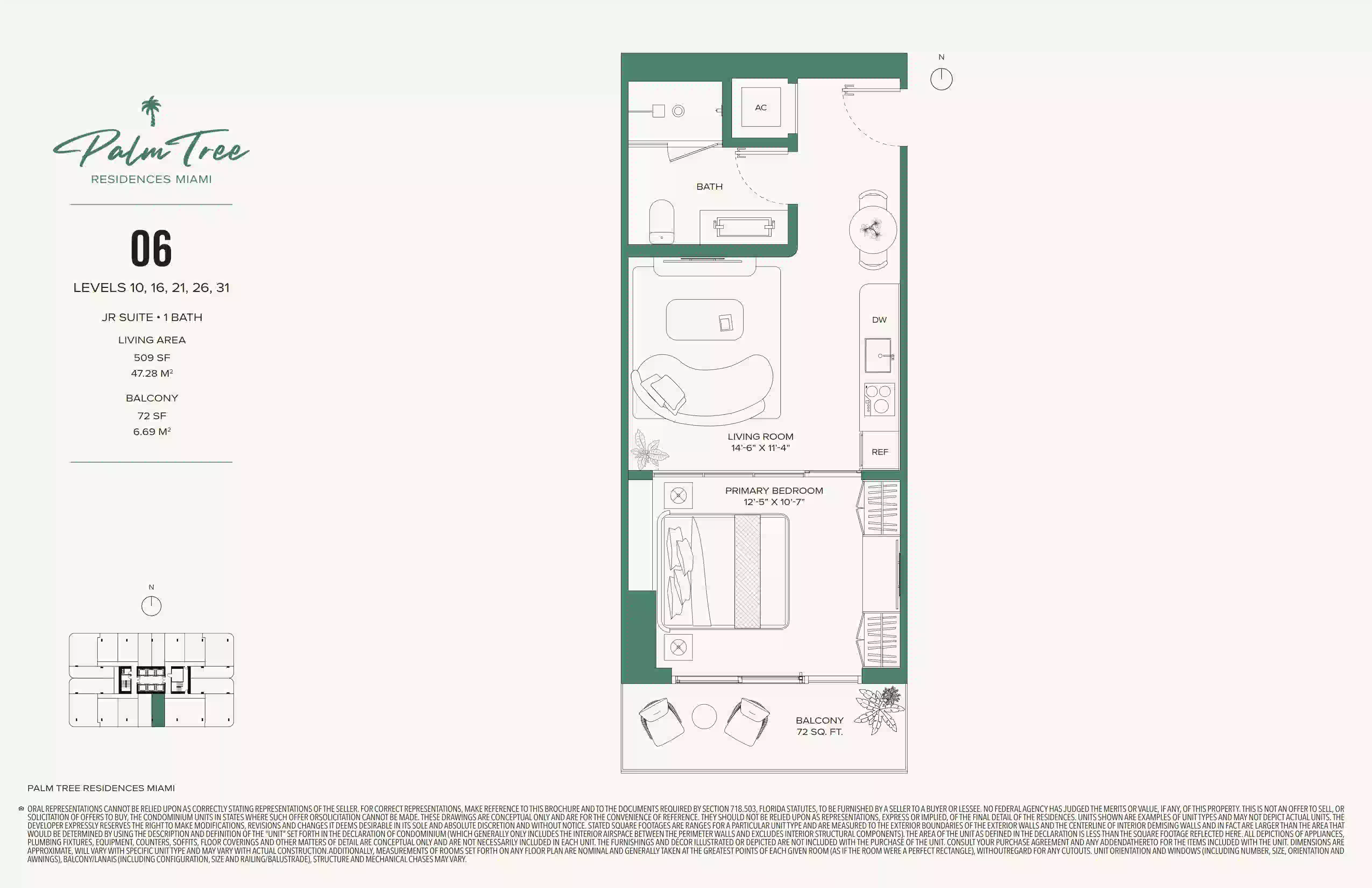
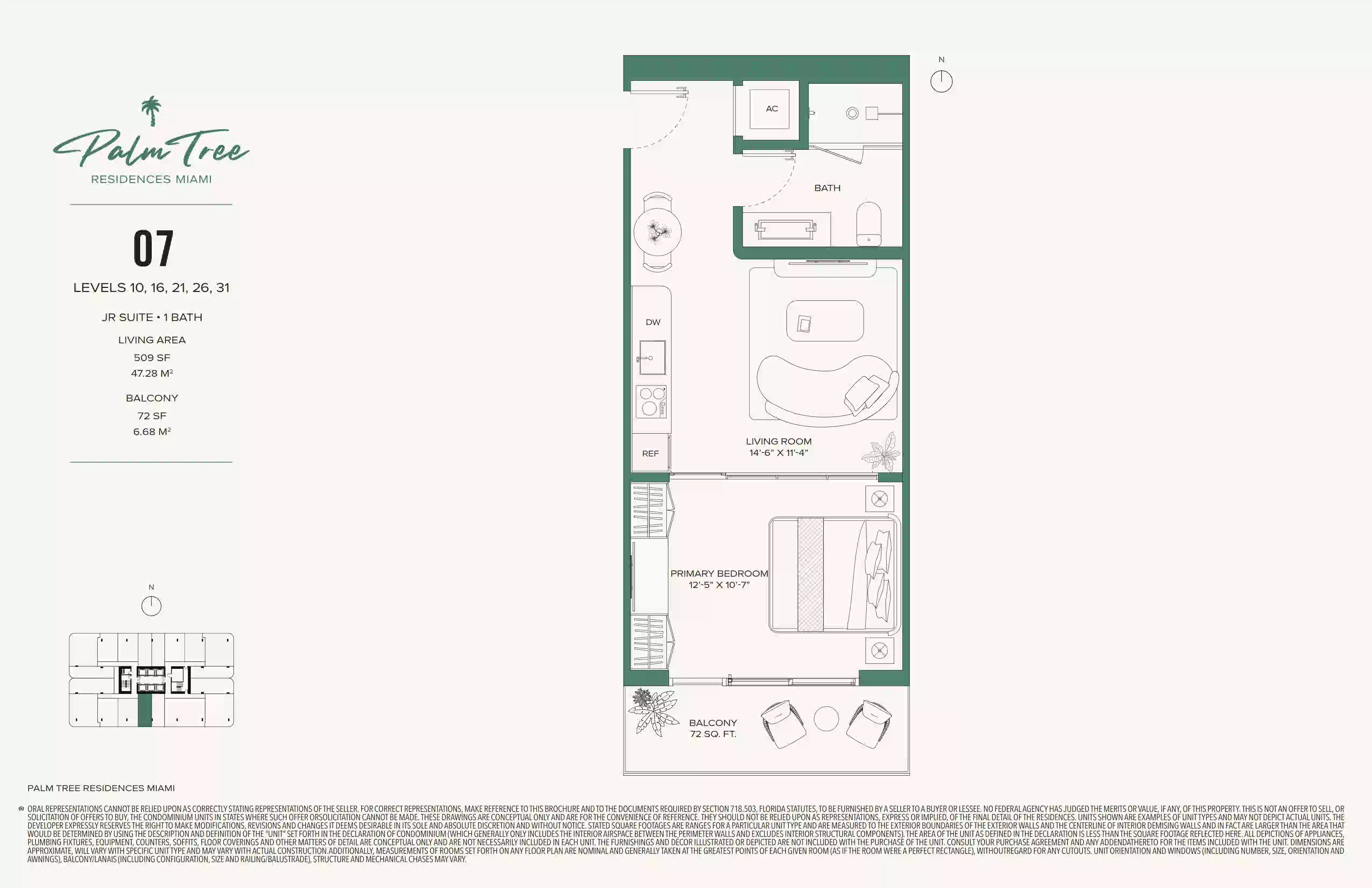
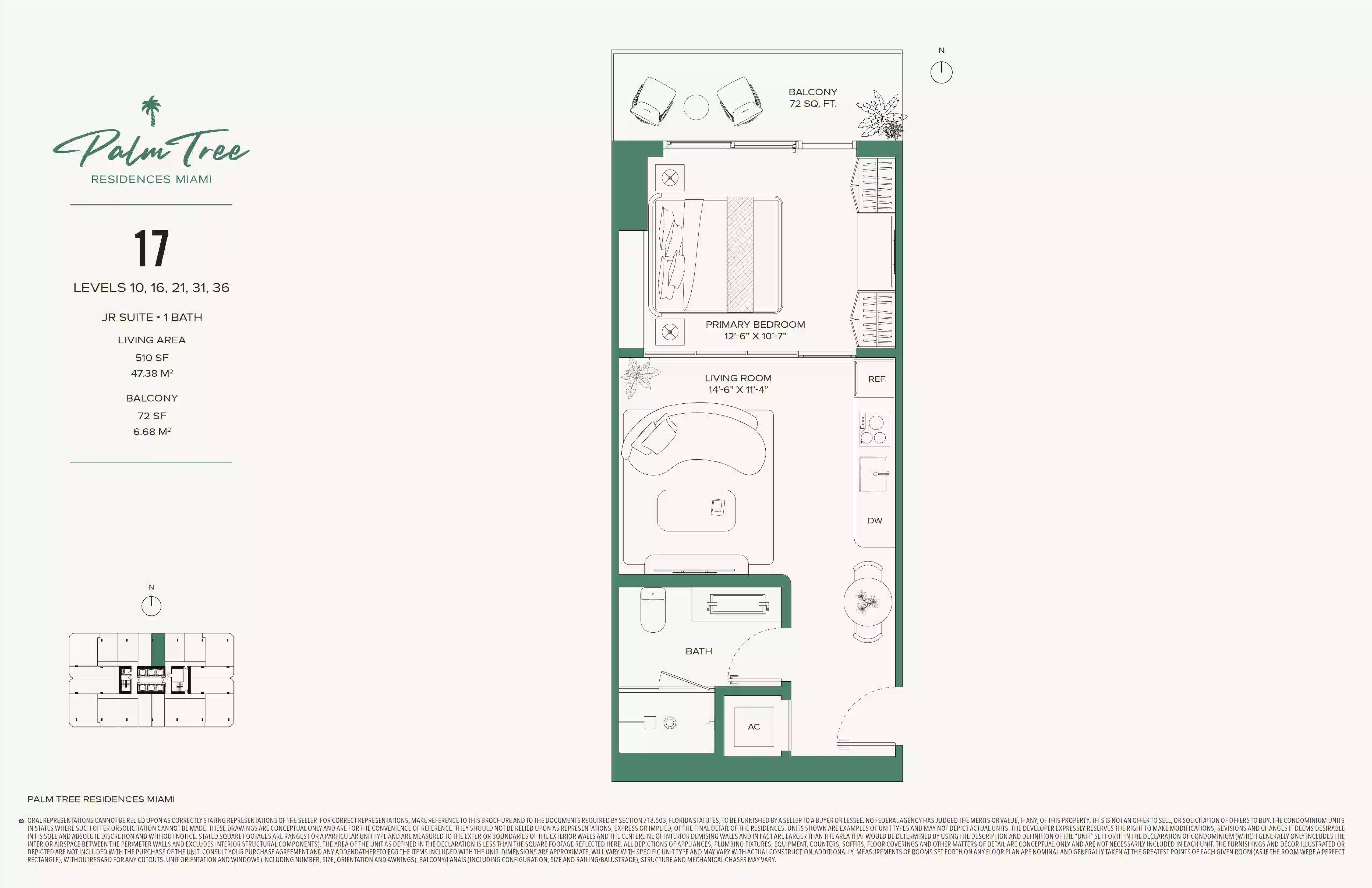
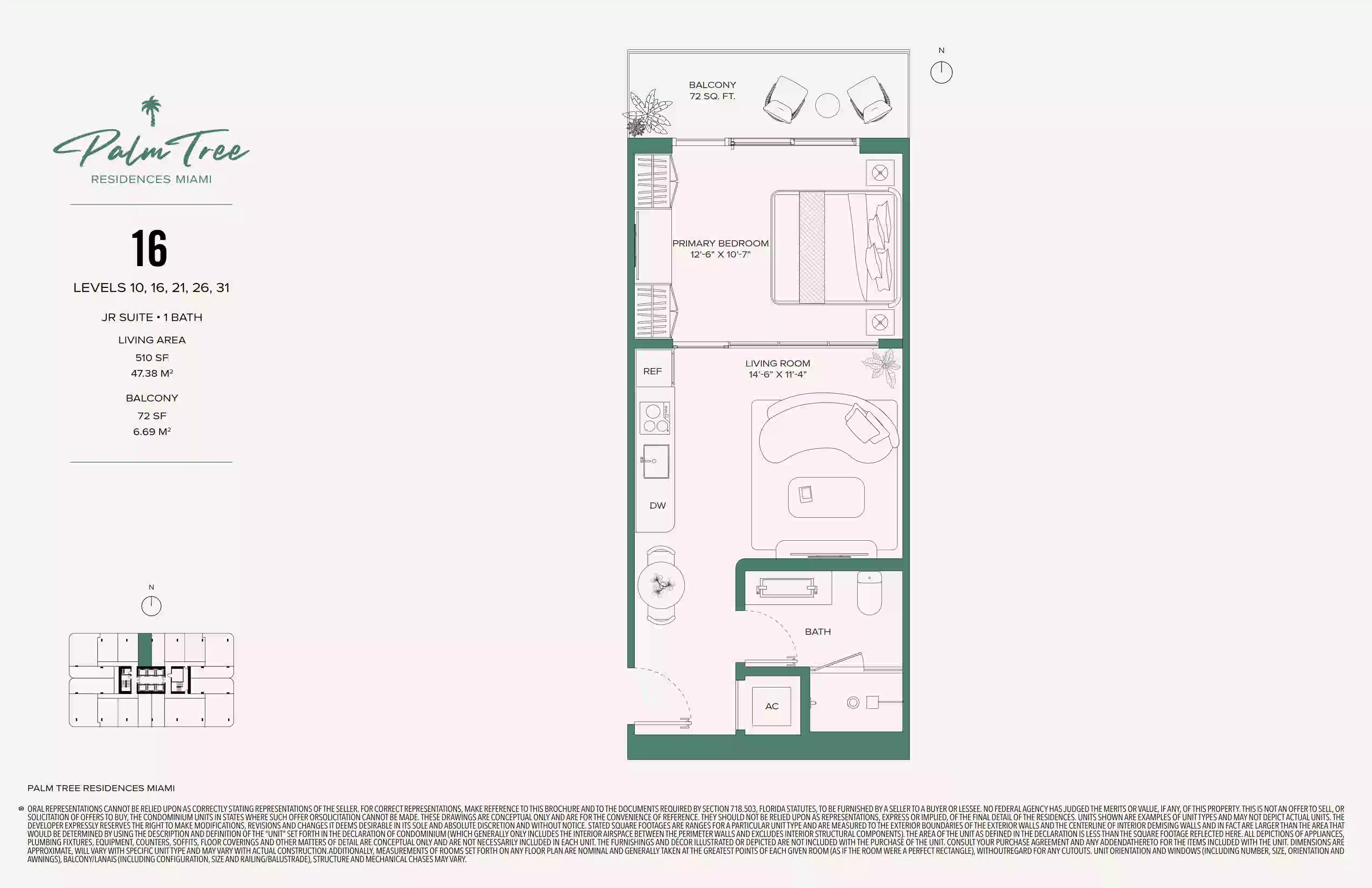
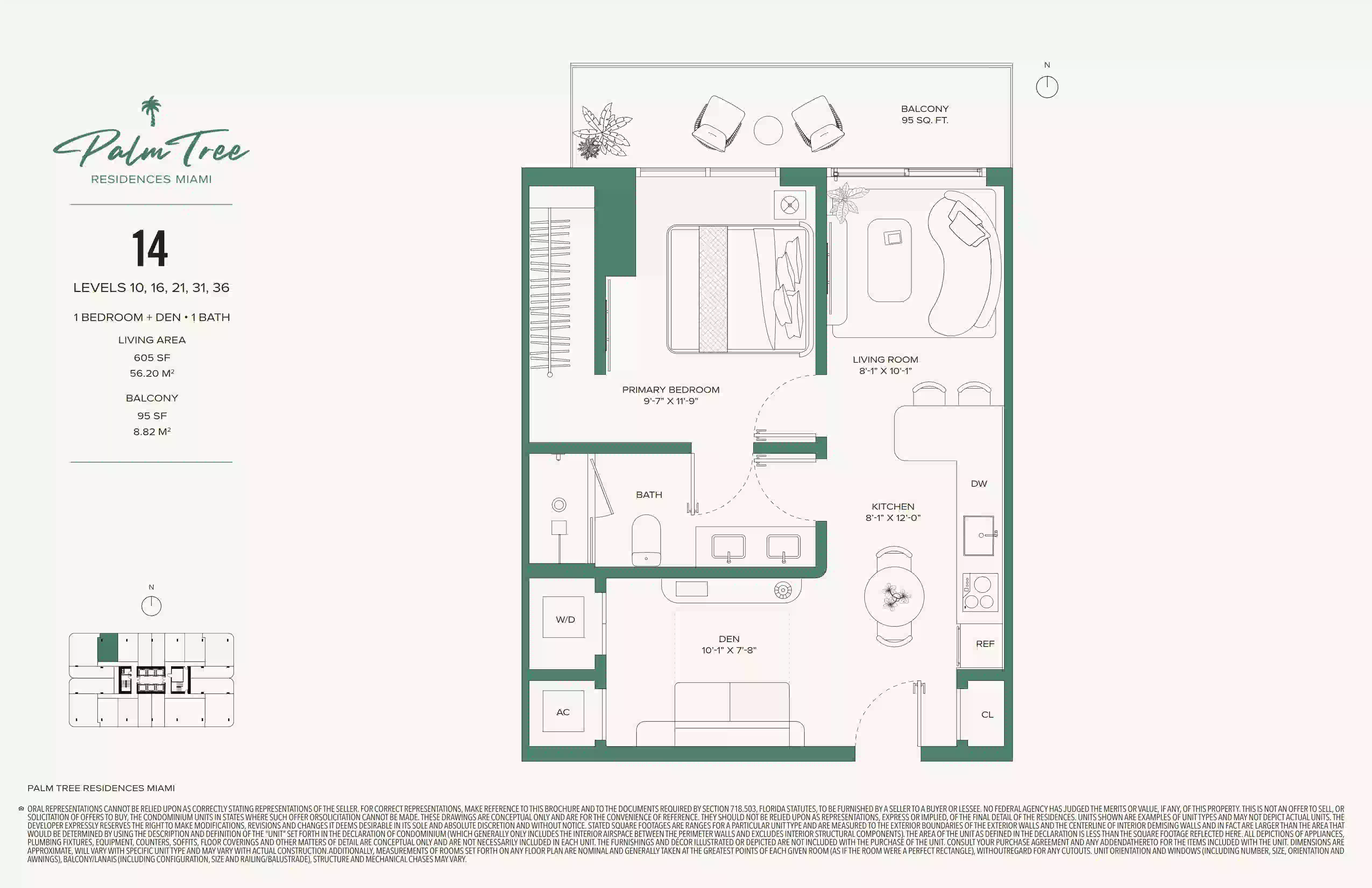
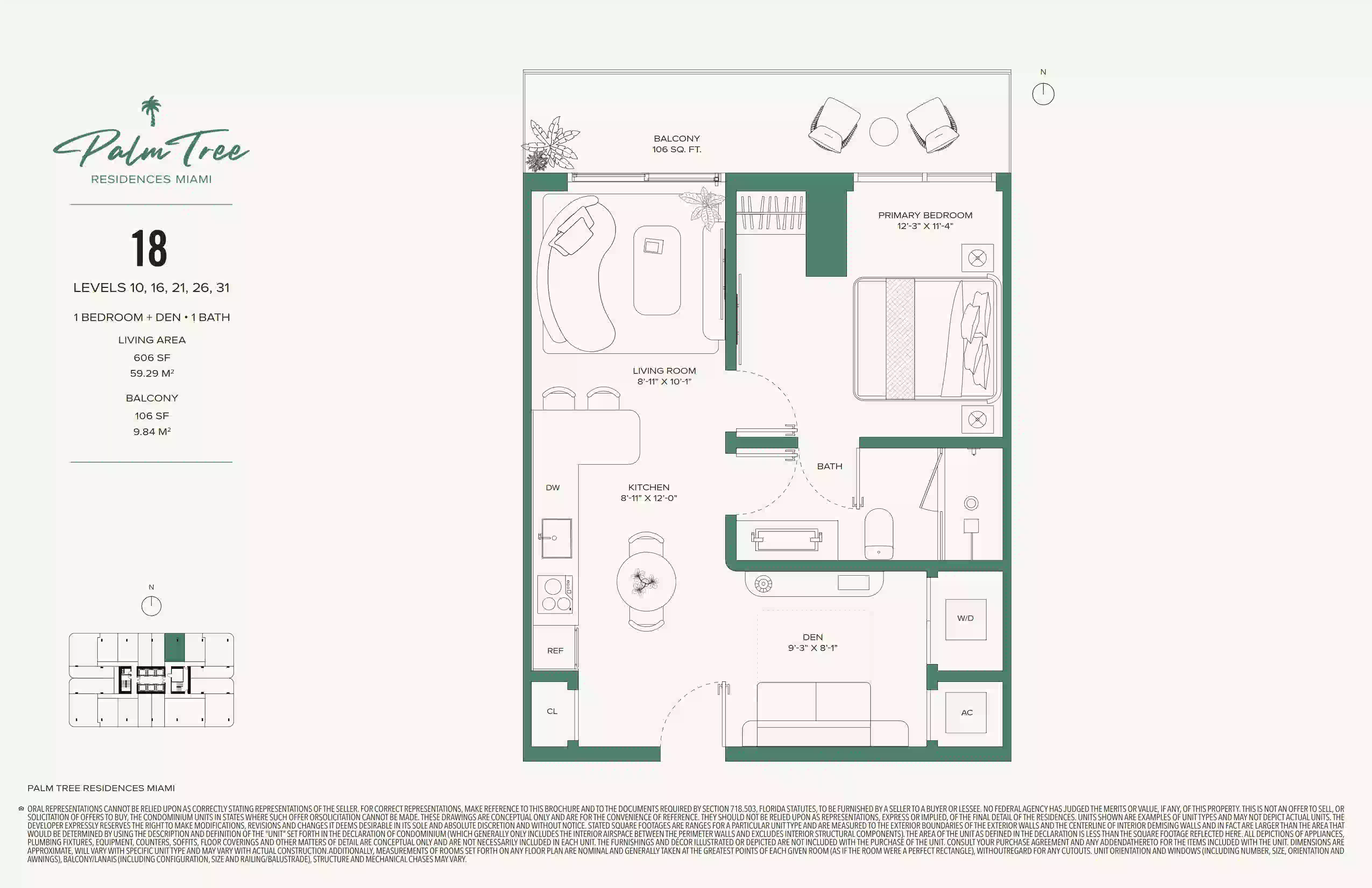
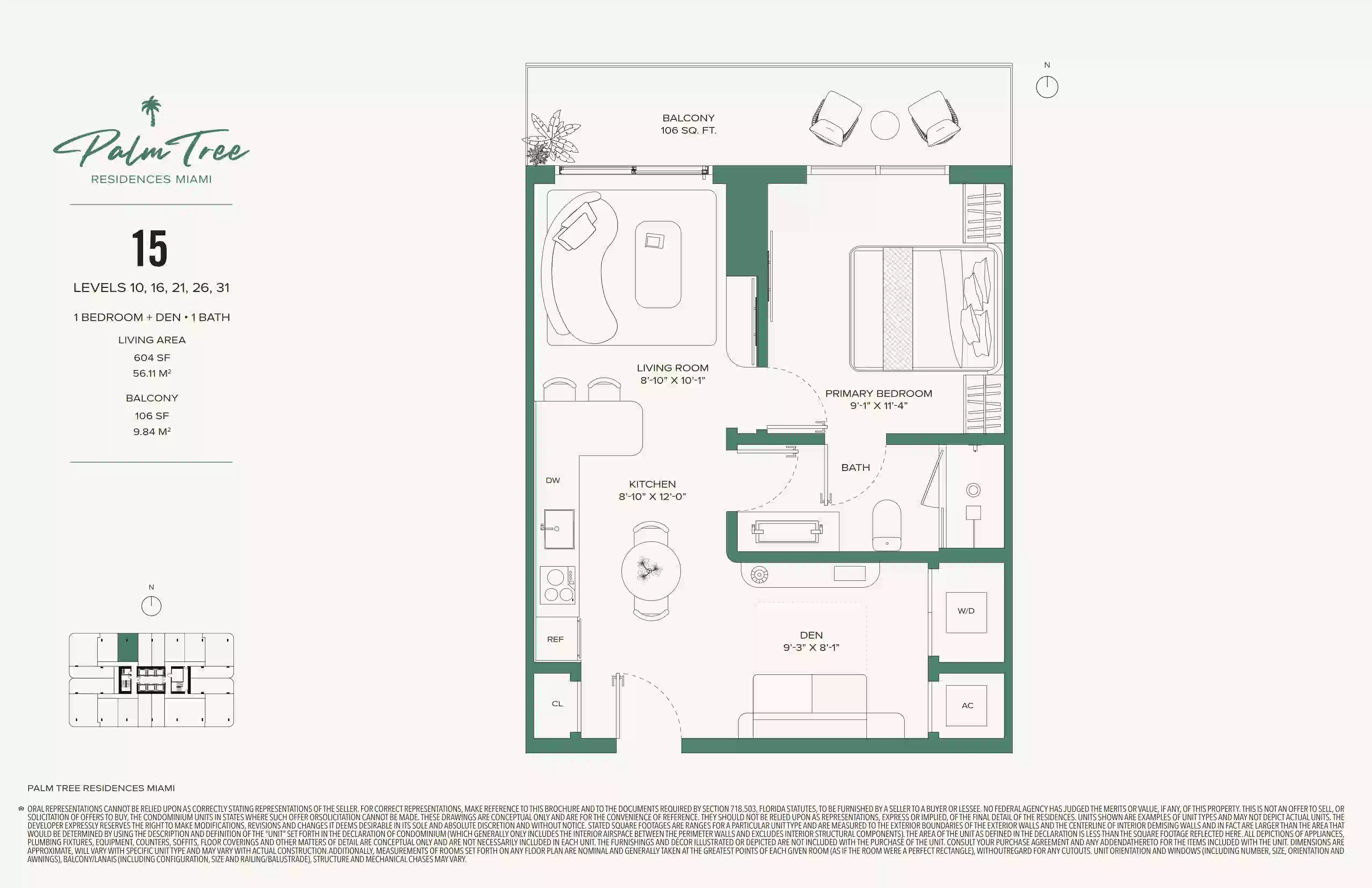
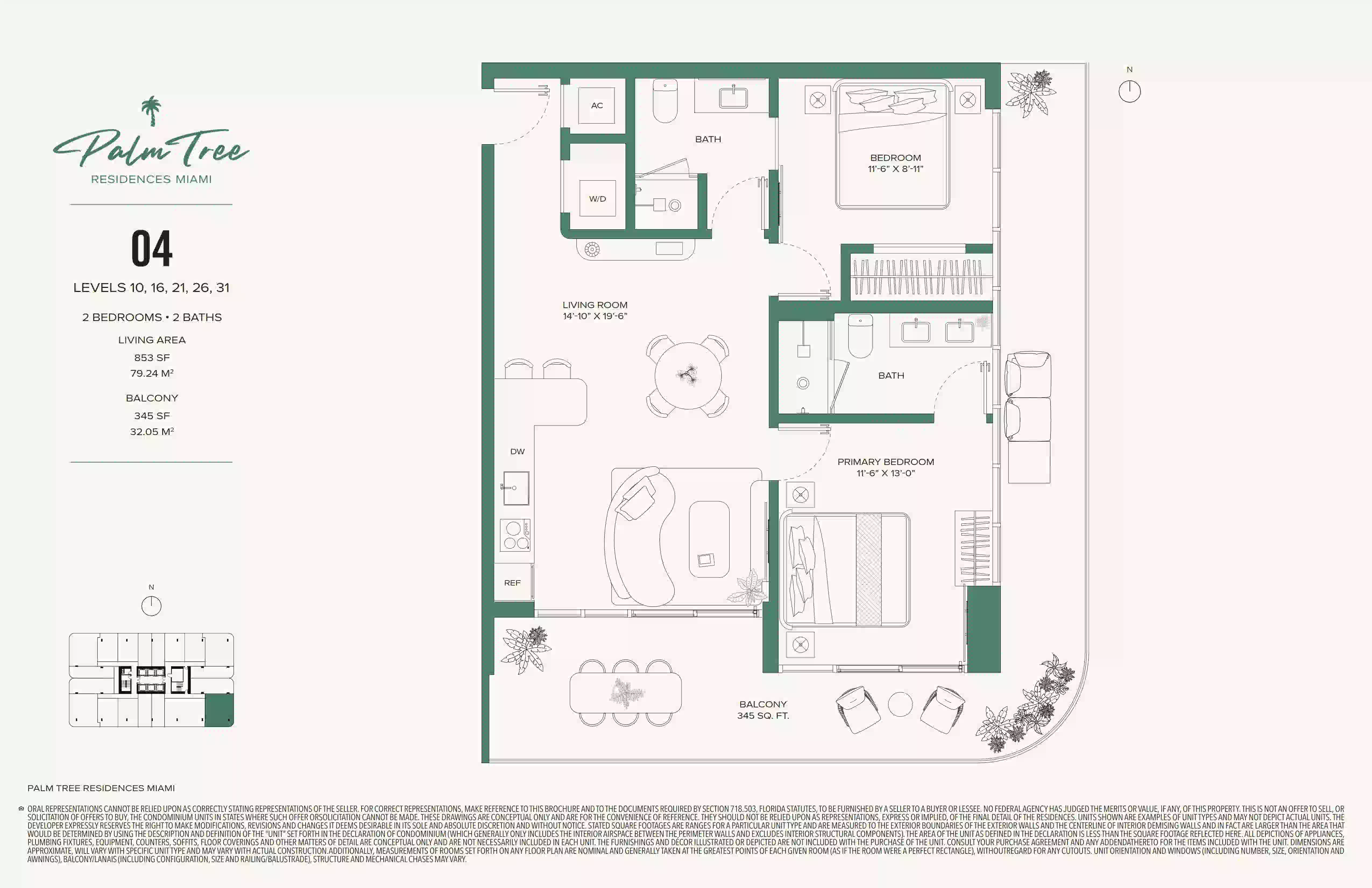
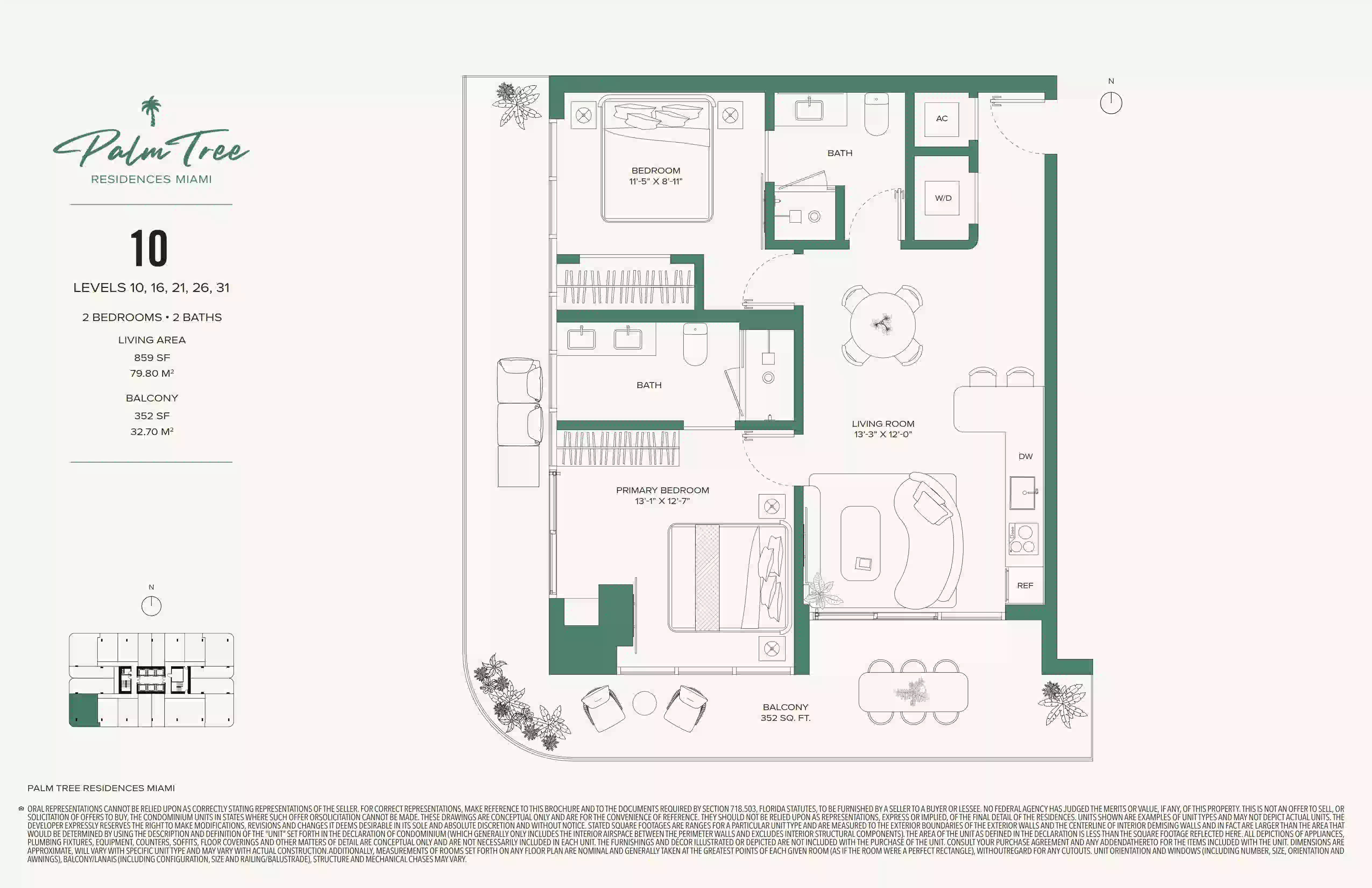
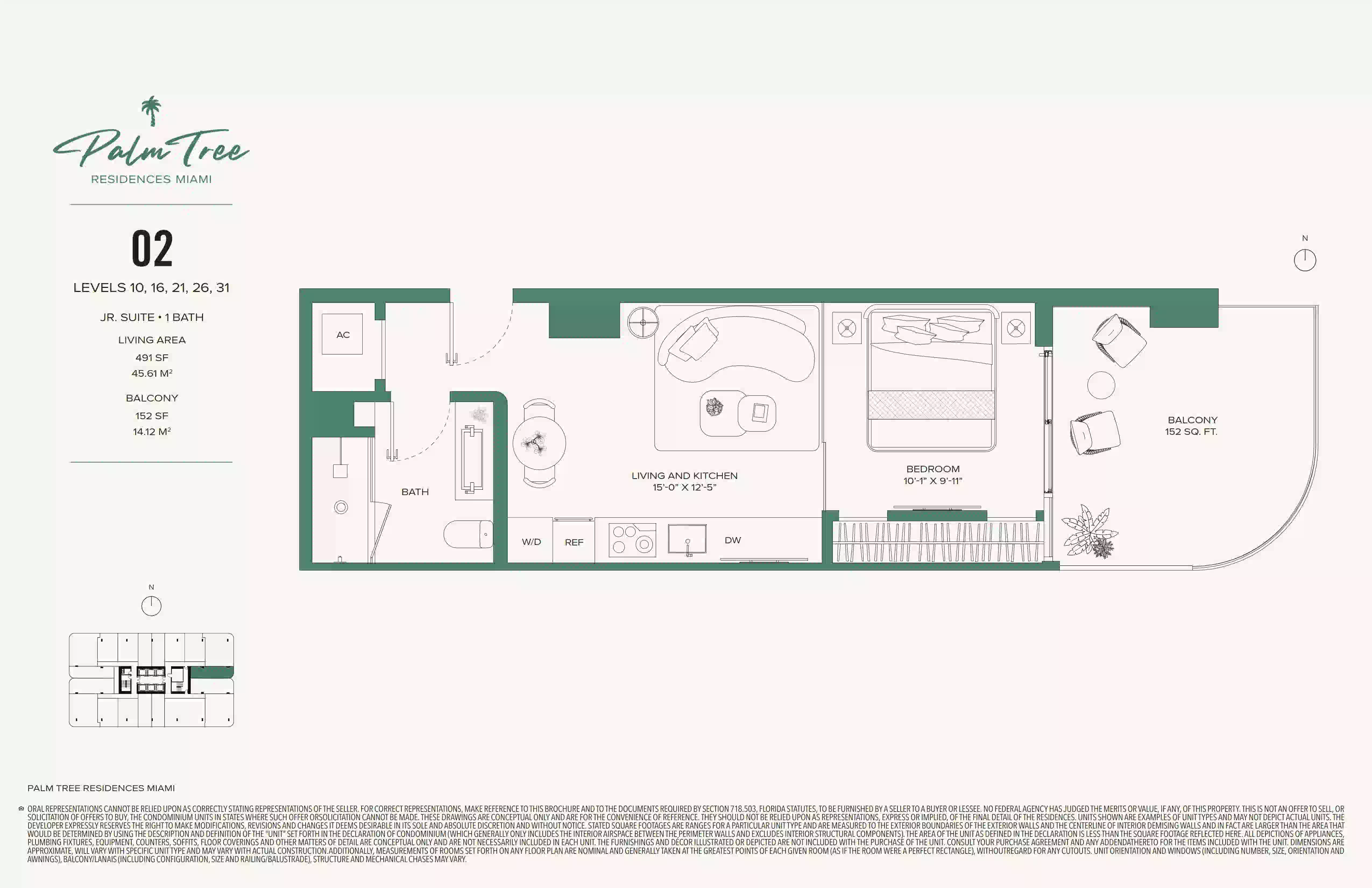
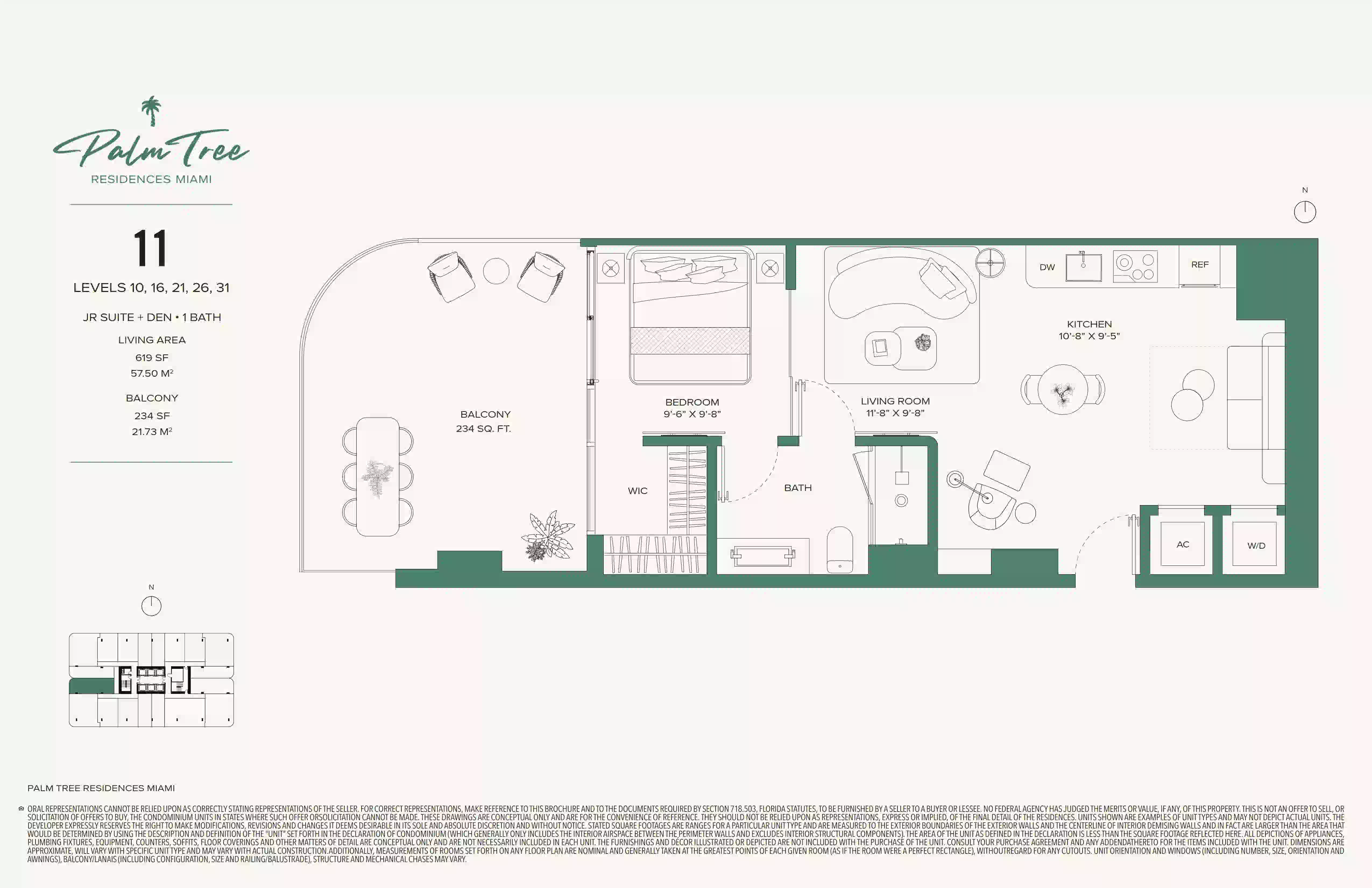
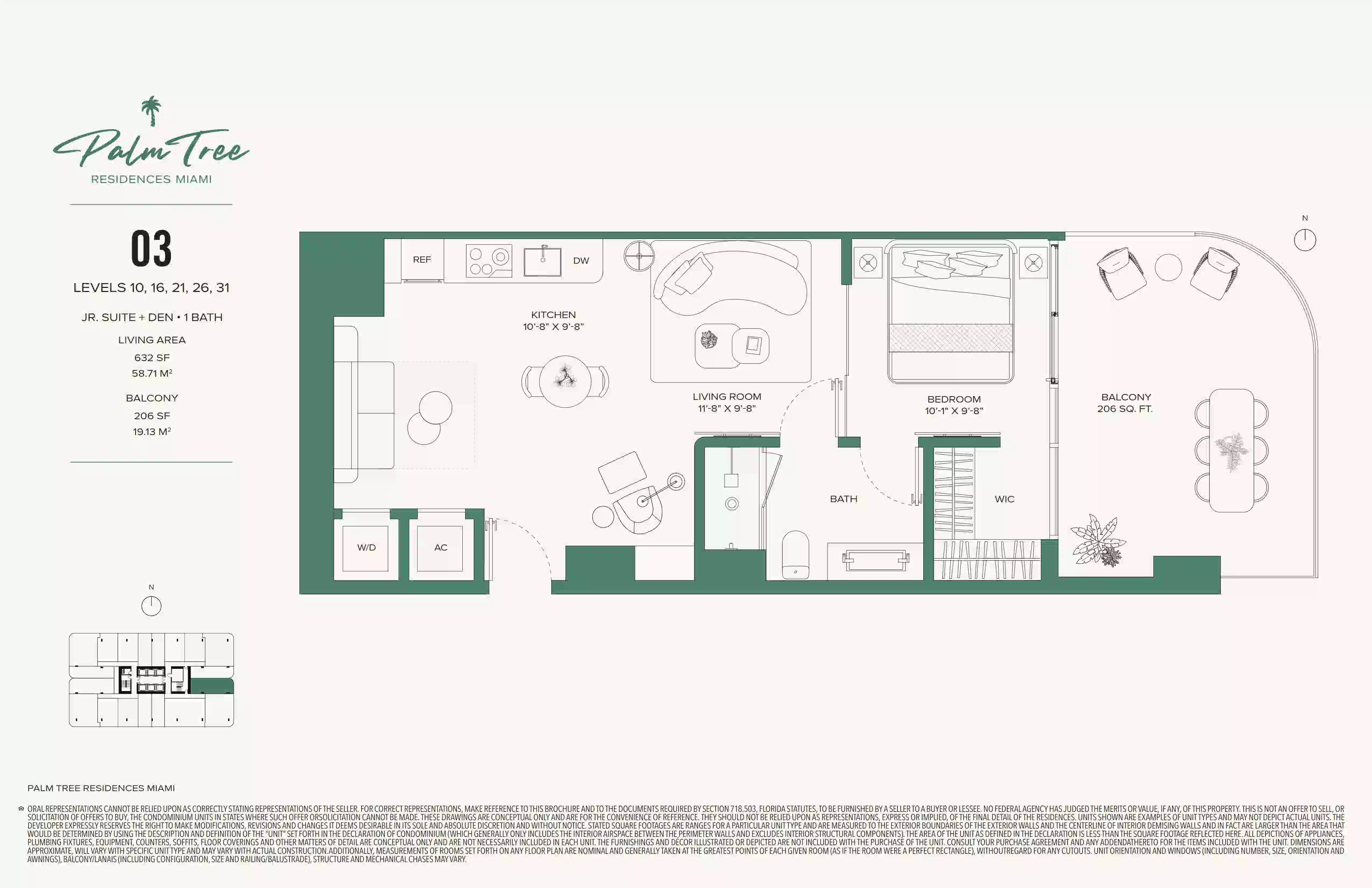
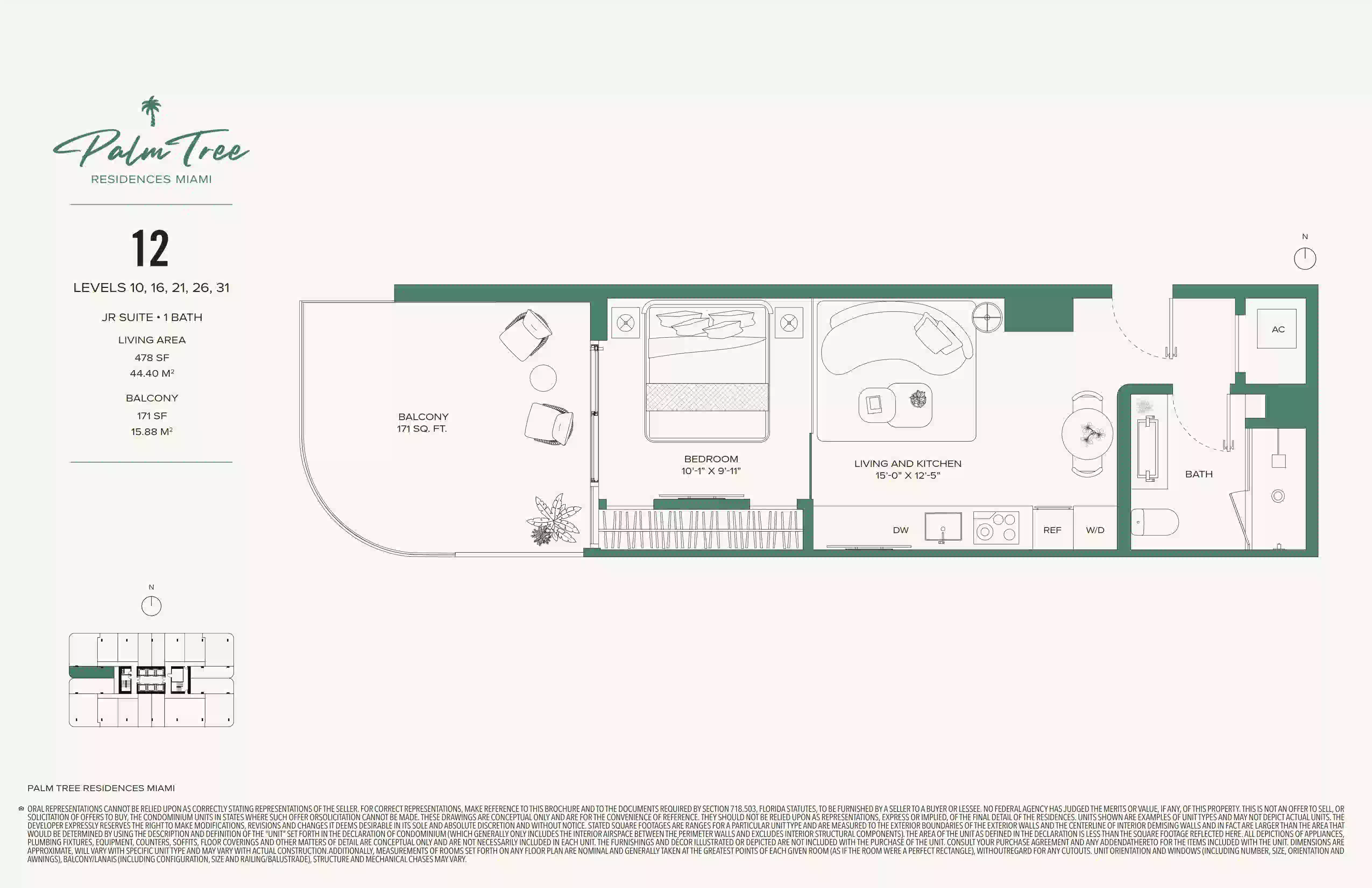
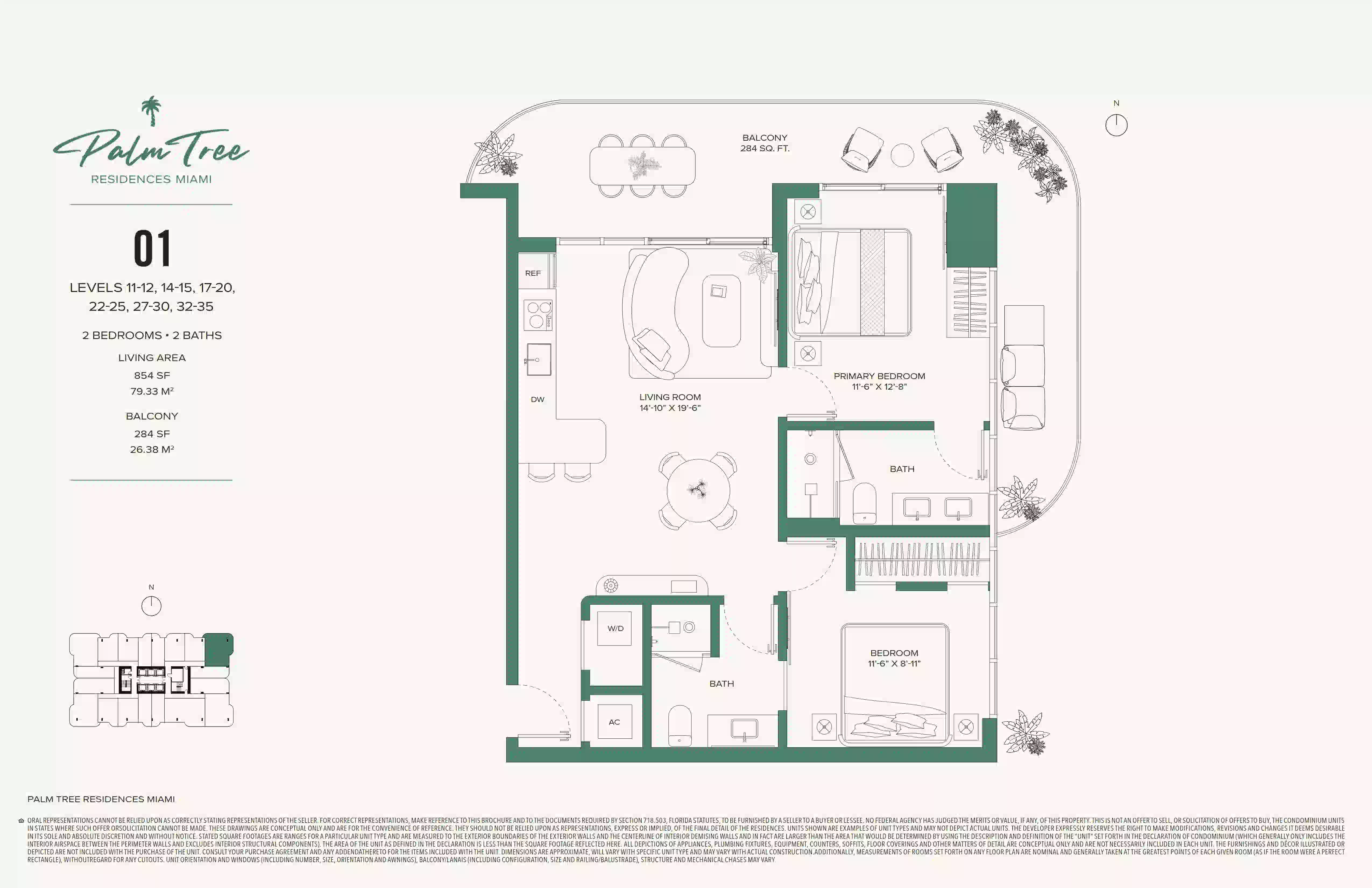
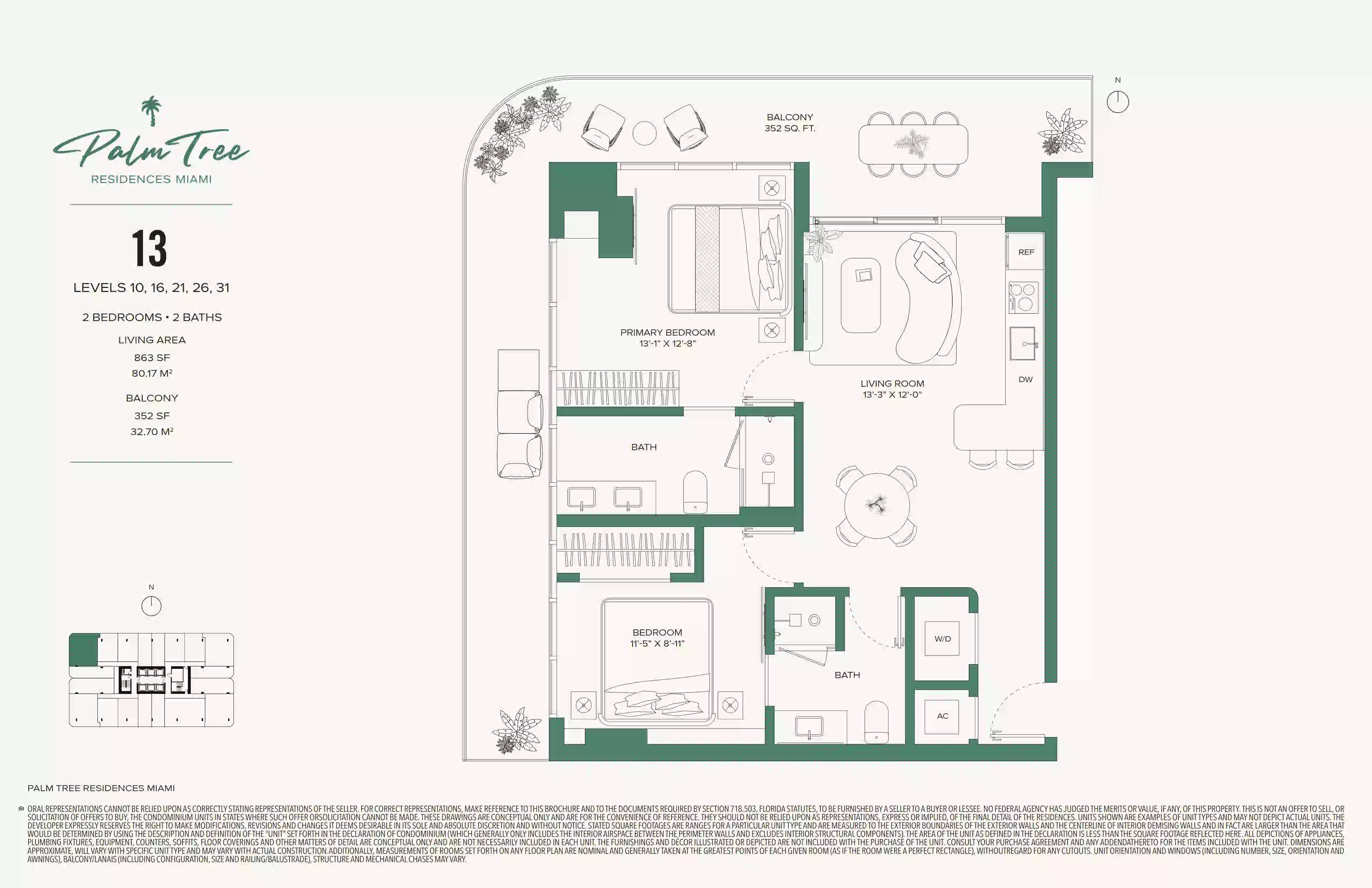
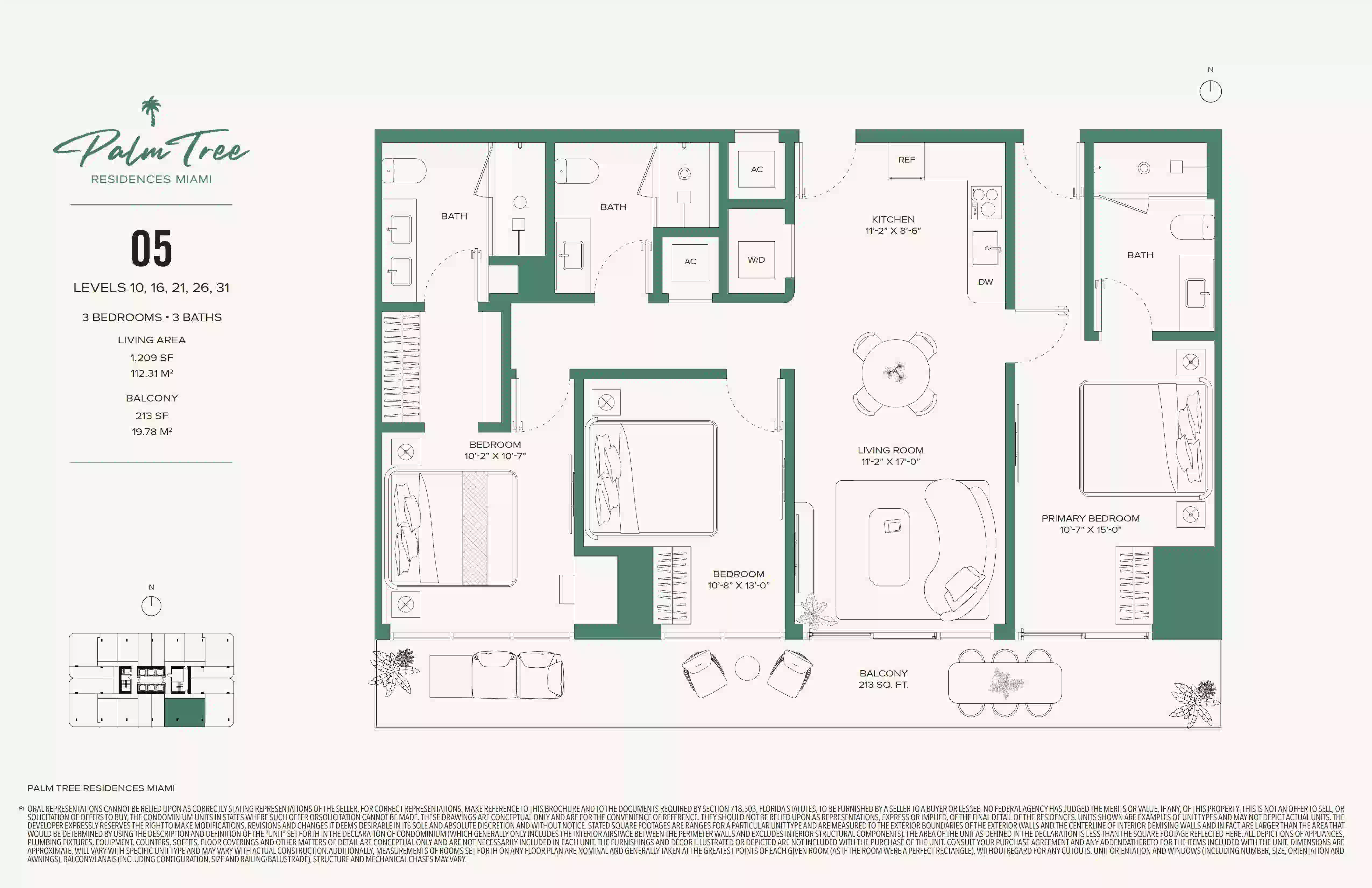
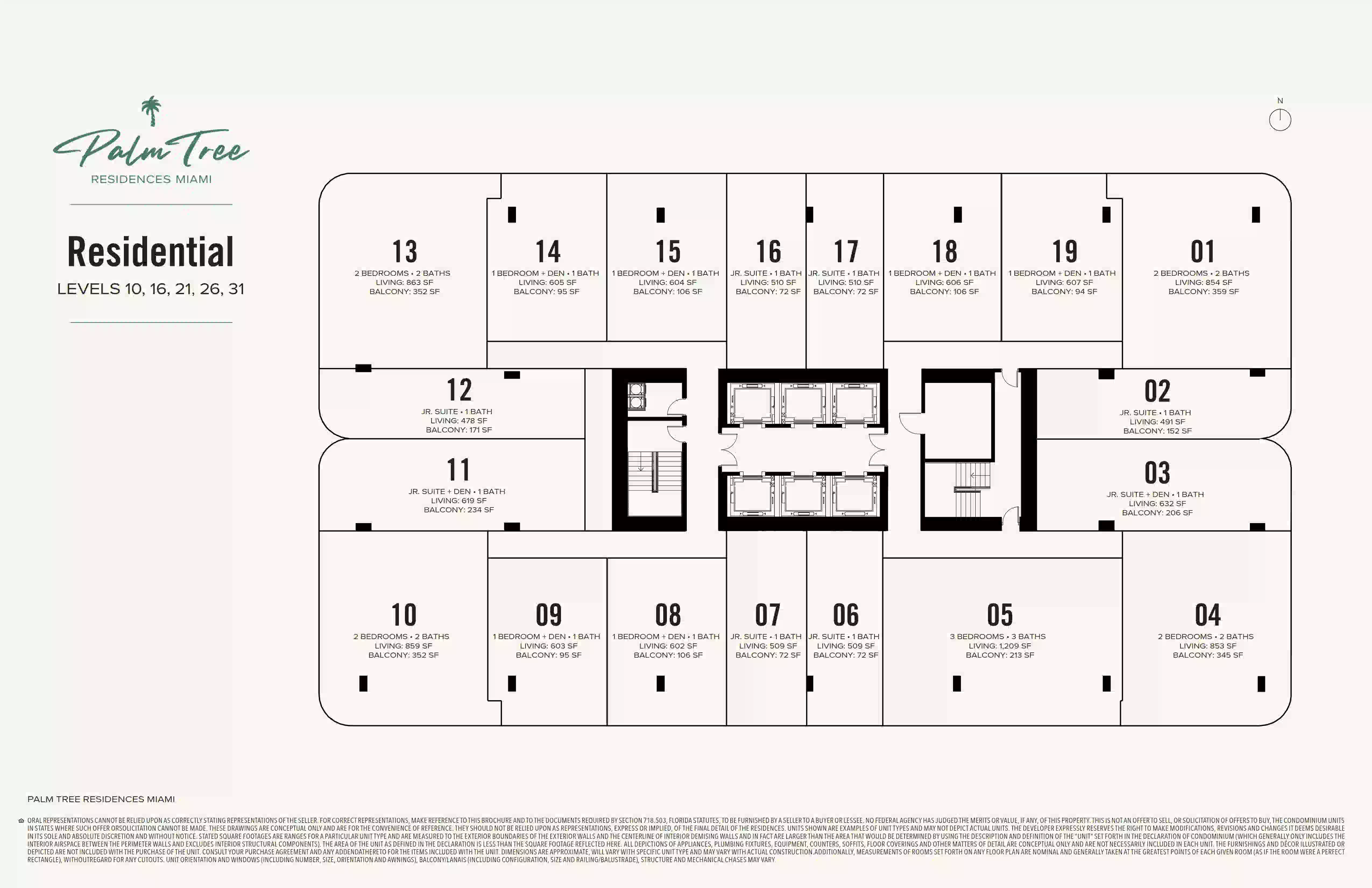
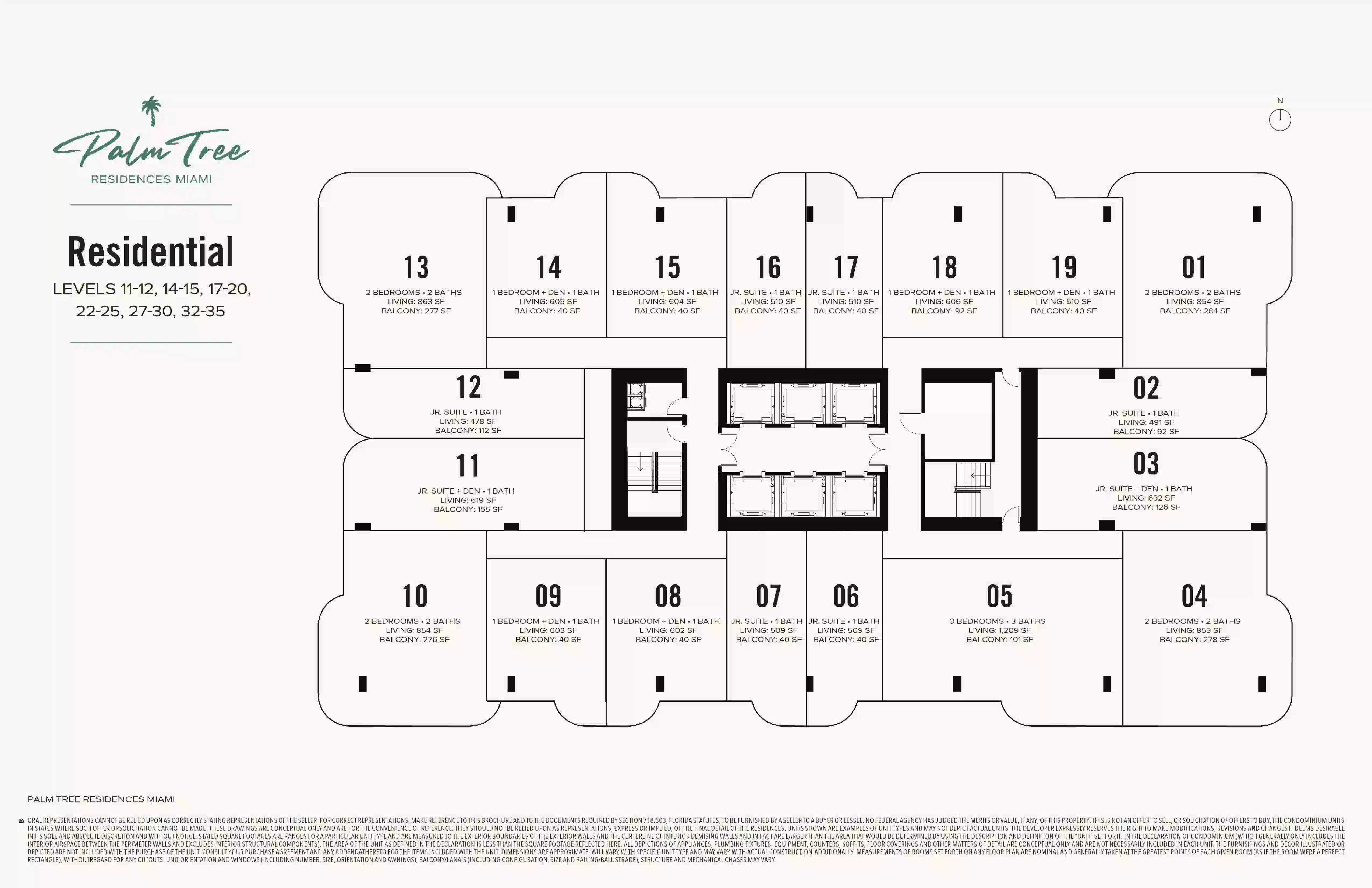
Palm Tree Residences Miami offers 483 fully furnished residences across 37 floors, organized across five unit types from junior suites to three-bedroom homes.
Every unit arrives turn-key: Italkraft designer kitchens with fully integrated Miele appliances, custom countertops and backsplashes, contemporary undermount sinks, Waterworks bathroom fixtures, custom countertops in baths, finished floors and walls in wet areas, fully built-out bedroom closets with shelving and drawers pre-installed, and a built-in washer and dryer.
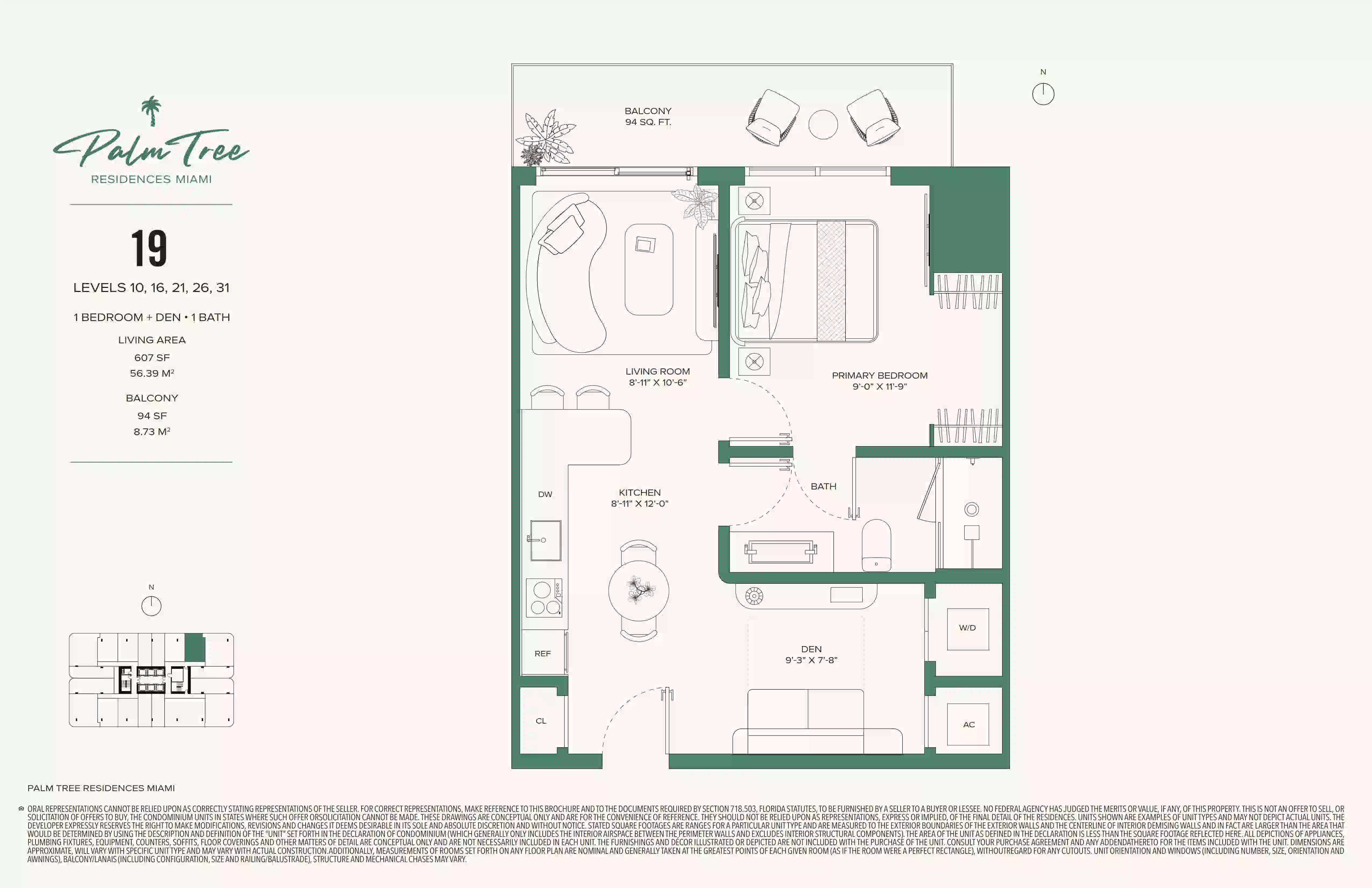
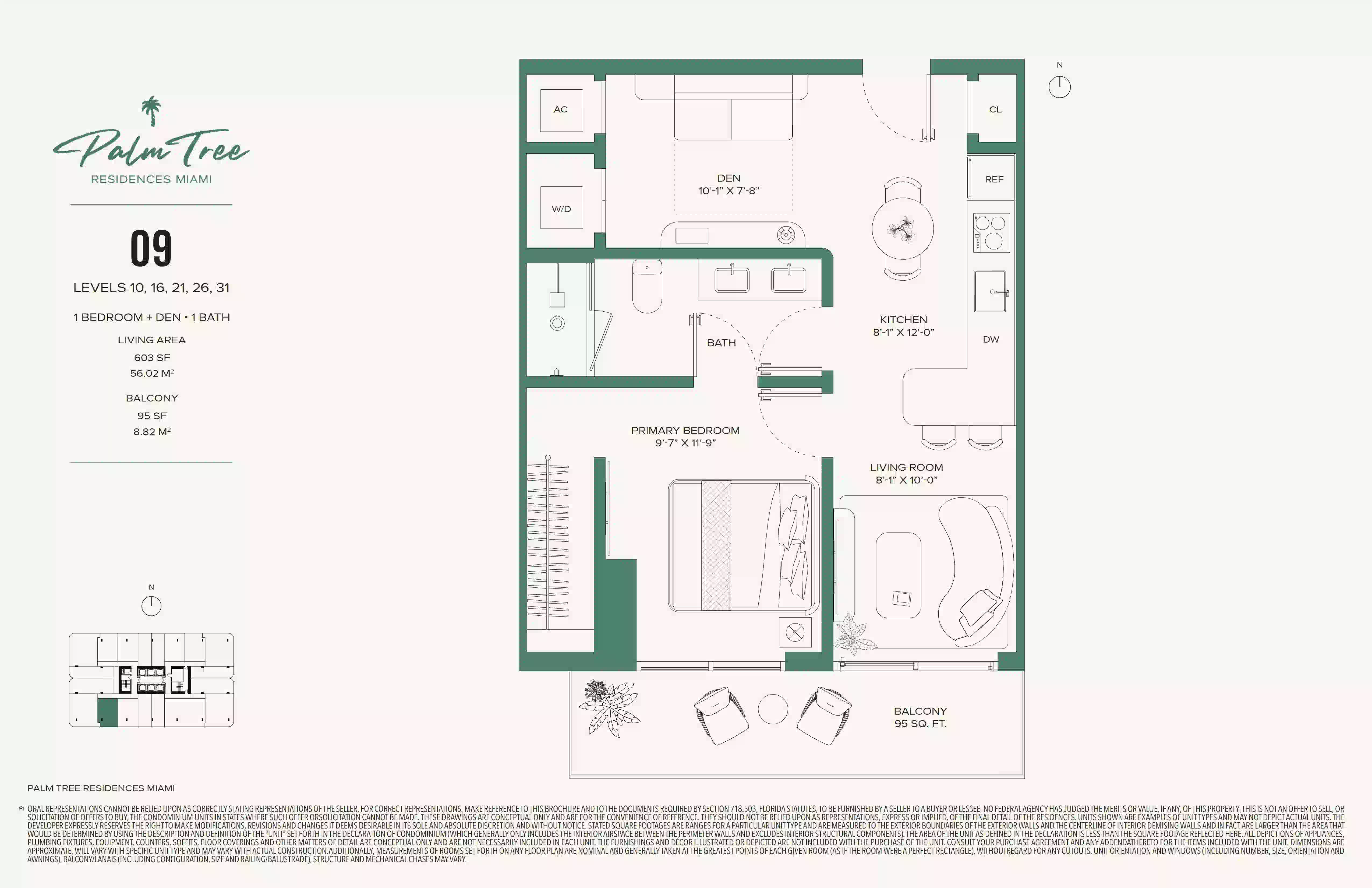
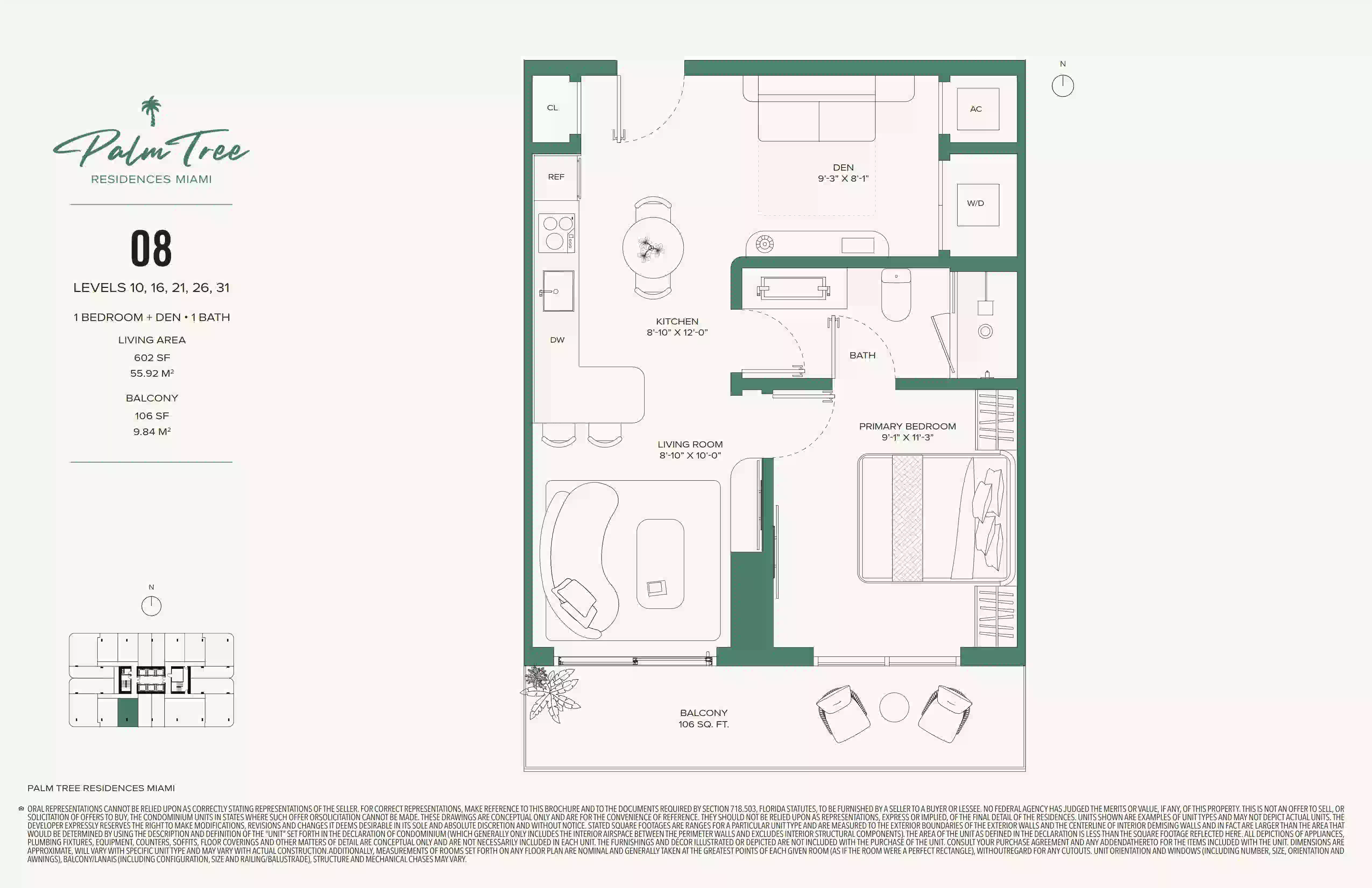
Select dens are equipped with custom Murphy beds, giving investors the flexibility to present a two-room experience within a compact footprint.
Buyers looking at condos for sale in Miami in this price range typically face a binary choice: the unit is investment-ready but generic, or it is distinctive but requires a full furnishing and staging budget before it generates income.
Palm Tree Residences solves both sides of that equation simultaneously: the homes arrive branded, furnished, and aligned with an identity that already has a paying, ticketed global audience.
Prices and square footage are subject to change without notice. Full price range: $560,000 to $3,000,000.
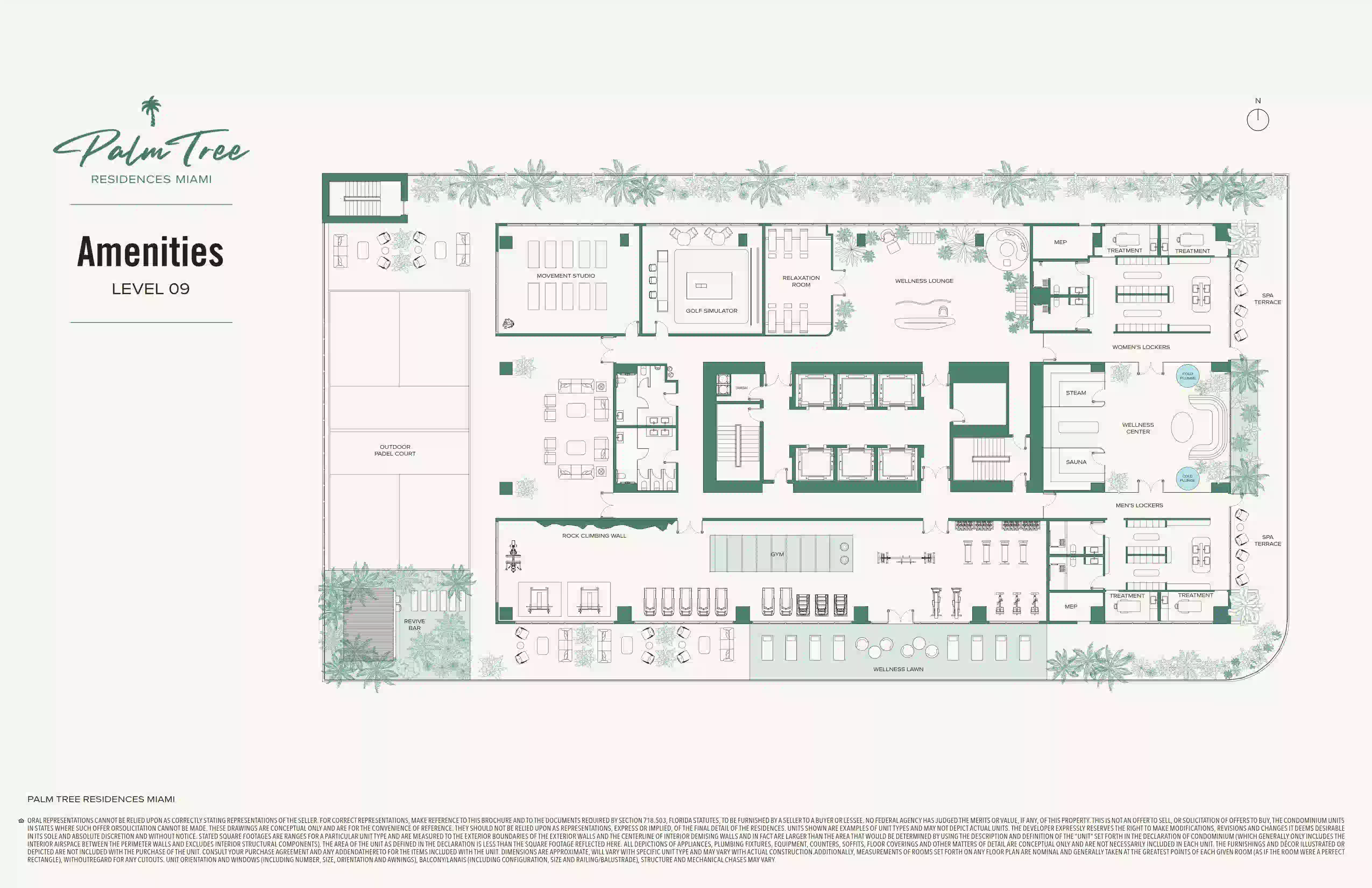
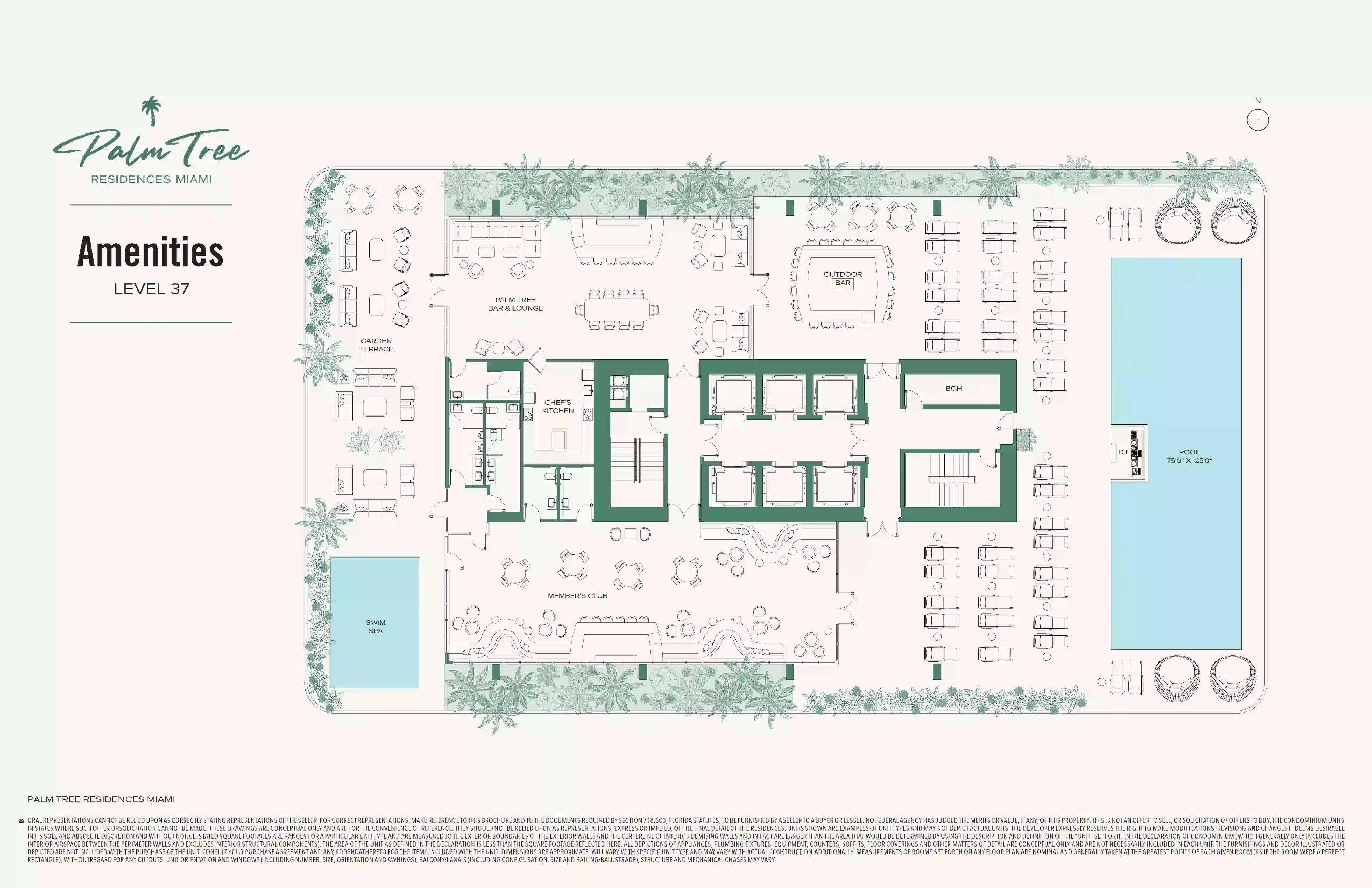
The amenity program at Palm Tree Residences Miami spans over 57,000 square feet across three levels. Unlike towers where the amenity program is a neutral zone of shared gym equipment and a pool that could belong to any building, every element here is an expression of the Palm Tree identity — specific, programmed, and operated by a brand with a proven track record of filling rooms.
Ground Level — Palm Tree Club Venue
The building's ground floor operates as a full Palm Tree Club venue: a dining and nightlife experience with sounds curated from the brand's global artist network.
Residents hold priority access, preferred seating, and dedicated entry. This is not a lobby bar or a resident café. It is a live-programming venue, open to the public — which means the building generates its own demand from outside, not just from within.
No other tower in Miami's current residential pipeline offers an equivalent structure: a resident-accessible, brand-operated nightlife venue built into the building's base and programmed independently of the HOA.
Rooftop — Palm Tree Beach Club
The rooftop level delivers the brand's signature outdoor experience: a resort-style infinity pool with panoramic views of Downtown Miami, a Palm Tree Club bar and lounge set within a lush garden-style terrace, and a private members' lounge reserved for residents and guests.
The outdoor double padel court sits adjacent, with lounge seating and sweeping city views — a setup that functions as well for a Sunday morning match as for a sunset gathering in F1 weekend.
Fitness & Wellness
The fitness center is equipped with Technogym cardio equipment, free weights, functional training turf, and a climbing wall — a configuration closer to that of a private gym than a typical residential fitness amenity. A dedicated movement studio handles yoga, stretching, and Pilates.
The wellness circuit includes steam, sauna, and cold plunge, with private treatment rooms and separate his-and-hers locker rooms with showers. A juice bar sits adjacent to the fitness floor.
Additional resident amenities include a Palm Tree Club golf simulator, valet parking, Palm Tree House cruiser bikes, secure Wi-Fi in common areas, and 24-hour front-desk concierge and security.
31 Northwest 10th Street places Palm Tree Residences in Miami's Park West district — the northern edge of the downtown core, where the city's entertainment infrastructure and its emerging residential fabric occupy the same blocks.
What Park West does not offer — and what buyers should understand clearly — is residential quiet. This is Miami's entertainment corridor. Kaseya Center events, the Palm Tree Club's ground-floor programming, and the district's proximity to the city's nightlife infrastructure mean the building maintains a sustained energy level after dark.
For buyers whose priority is a serene, low-density neighborhood, Coconut Grove, Coral Gables, or Bay Harbor Islands would be more suitable choices. For buyers who chose Miami precisely for this energy — and who want an address that generates income when they are elsewhere — Park West's density is a structural advantage, not a drawback.
A Saturday in Park West
The building doesn't ask you to find the neighborhood — it puts the neighborhood in the lobby. On a Saturday morning, the ground-floor Palm Tree Club venue is quiet before noon; the coffee is there if you want it, and the staff, per residents and early visitors, treats the regulars with the kind of low-key attentiveness that good hospitality always makes look effortless.
Those who don't have priority entry and a building that is, for the night, the destination — not a place you leave to find one.
The developers explicitly confirm short-term rental flexibility at Palm Tree Residences Miami, and it is one of the project's most commercially significant features.
The Real Deal reported in May 2026 that Miami developers are actively competing to meet investor demand for STR-eligible pre-construction units, with multiple projects launching in quick succession across Wynwood and the downtown core. Within that segment, however, most projects are brand-neutral: they offer operational flexibility without the brand infrastructure to support consistent demand and pricing power at the unit level.
Palm Tree Residences distinguishes itself from the two most directly comparable competitors on concrete grounds. Natiivo Miami, the first purpose-built STR condominium in the city, offers the operational framework — hotel-style management and no minimum-rental restrictions — but lacks a lifestyle brand, cultural programming, and an events ecosystem that generates active demand for the specific address. Investors at Natiivo own a management platform.
Palm Tree Residences owners own an address that the brand itself markets through its global festival and events calendar. The Standard Residences in Midtown Miami brings a lifestyle identity but operates within a hotel framework that limits owner control and targets a younger, design-forward renter profile — not the executive and international traveler that Palm Tree's F1 Miami and Art Basel positioning reaches.
According to the Knight Frank Branded Residences Report, branded residences globally command a premium averaging 31% over comparable unbranded product in the same submarket, with the premium highest where the brand operates active programming in or adjacent to the building.
Palm Tree Residences is the only pre-construction tower in Miami's current pipeline where the operating brand runs a live on-site venue and maintains a documented, ticketed global events calendar that drives awareness of that venue. That is a structural distinction, not a marketing claim.
The entry price point of $560,000 for a fully furnished, STR-eligible junior suite in a branded tower in Downtown Miami represents one of the most accessible thresholds for pre-construction condos in Miami at this specification level — particularly given the fully furnished delivery model, which eliminates the post-closing capital outlay that typically delays income generation by three to six months in comparable towers.
The rental policy is subject to final confirmation in the HOA documents at closing. Buyers with investment intent should verify short-term and long-term rental terms directly with the sales team before contract execution.
A projected completion date has not been publicly confirmed as of May 2026. The project launched sales in May 2026 and is currently in the pre-construction phase.
Buyers with specific occupancy timelines should request the construction schedule directly from the sales team and factor in standard pre-construction lead times when planning.
Yes — short-term rental flexibility is explicitly confirmed by the developer consortium and is among the project's defining commercial characteristics. The building is positioned as an investment-friendly residence from the ground up.
Rental eligibility terms are subject to final HOA document review before closing; buyers should confirm the specific policy structure — including any restrictions on rental frequency or minimum stay — before signing a purchase agreement.
Junior suites (478–510 sq. ft.) are compact, single-room residences suited for investors prioritizing yield over owner-occupancy. The one-bedroom-plus-den layout (602–607 sq. ft.) includes a secondary room with a custom Murphy bed in select units, allowing a renter to use the unit as a functional two-room residence.
The den adds roughly 100 sq. ft. at a comparable entry price, making it the stronger choice for buyers targeting short-term rental guests who travel as couples or with a colleague.
Kobi Karp Architecture & Interior Design is responsible for both the tower's architectural form and its interior specifications — an unusually unified authorship for a project of this scale.
All residences are delivered fully furnished and finished: Italkraft cabinetry with integrated Miele appliances, Waterworks bathroom fixtures, and built-out closets with pre-installed shelving are standard across every unit type. No additional furnishing budget is required before the unit is rental-ready.
Residents receive priority access to Palm Tree Festivals, including preferred ticketing and table opportunities; dedicated expedited entry at Palm Tree Club venues globally; weekday dining privileges at Palm Tree Club Miami; access to exclusive members-only tables, lounges, and premium viewing decks; and preferred pricing on tickets across select events.
The full benefits structure is tied to the building's HOA framework; the current benefits schedule should be confirmed with the sales team, as specifics may be refined before closing.
Among STR-eligible buildings currently in the Miami pipeline, Palm Tree Residences is the only one where the operating brand runs a live programming venue on-site and maintains a global events calendar that directly drives demand for the address.
Natiivo Miami offers the operational platform without the brand; The Standard Residences offers a lifestyle identity within a more restricted ownership structure. For a detailed side-by-side comparison including Botanic Residences and Duos Wynwood, contact a Bogatov Realty advisor directly.
Palm Tree Residences Miami is not a quiet building for a quiet life, nor was it designed to be one. At 483 units in Miami's most active entertainment corridor, with a live music venue at its base and a global festival brand on its door, it is built for owners who want Miami's energy as a daily reality — and want their address to work for them when they are somewhere else.
The STR flexibility is the mechanism. The Palm Tree brand is the demand driver. Together, they produce a pre-construction condo in Miami with a more specific and verifiable investment logic than most projects in this segment can offer.